Ian, our grower, sometimes becomes a roving reporter on wildlife. The text messages come thick and fast with new observations! Here are seven of the latest observations from The Fields.
A yellow plume moth, which we might have blogged about before, but maybe not! At rest the wings are often placed together, rolled up, but in reality there are divided wings. Their slender, charicsteristic (this is why they are called ‘plume’ moths) look makes them easy to identify, although they don’t really look like a moth or butterfly! Maybe on a twig it would help them be disguised. There are two overlapping generations in a year, from May to September. This is a common moth all over Britain, there are 34 different ones all over the country. Have you ever spotted one around where you live or walk?
This is a species of bugs belonging to the miridae family. It would normally be found feeding on nettle, clover, as well as composite plants like dandelion, or on potatoes, carrots, and chrsanthemums. They prefer to feed on the flowers, the buds, and the unripe fruit. In 1997 the scientists moved it from the Calocoris family to this one, capsid. It is also commmon and found all over Britain. As a nymph they are greeny, then changes colour as an adult. As they feed on sap, Ian was probably less delighted to find this one, (which would lead to curled or distorted leaves – not just potato leaves but any crop – compared to …
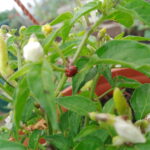
Here we have the first of a couple of ladybirds. This one is a 2-spot ladybird, we think. We have written about ladybirds before and the rise of the non-native harlequin ladybird as well as what their pupae look like, here. Ladybirds (and their pupae) are “voracious carnivores” – which means they are excellet for controlling things like aphids and the little whitefly you can see here on the chilli plant. The ladybird must think it is in heaven, surrounded by Christmas Dinner! Thank you ladybirds of the world! Ladybirds can be recorded on the UK Ladybird Survey which helps scientists and conservationists keep track of changes in UK habitats and ecosystems.
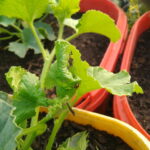
This ladybird seems orangey coloured with many black points. This is the harlequin ladybird, which became established in Britain only just over 20 years ago. They originally come from Japan and have been introduced around the world, with the aim of controlling aphids. It wasn’t deliberatly introduced to Britain, and research is ongoing to find out if it is a problem or not. It will be taking a place in the ecosystem of our native ladybird, possibly eating other things as well as aphids and whitefly. Have you seen one of these in your garden or while out and about?
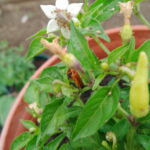
Here we have a red soldier beetle in amongst the chilli plant. This is an interesting one. It is misleadingly known as the “bloodsucker beetle” when it does nothing of the sort! It might also popularly be known ad the Hogweed Bonking Beetle – but here we are a family website, thankfully it is on chilli! The “red” part of its name comes from its colour. The “bonking” part of its common name comes from its habit of mating in large numbers on flower heads. They are also beneficial insects, feeding on aphids and other small insects, as well as helping to pollinate. And, amazing, their larvae prey on slugs! Welcome Mr Soldier Beetle, come over here in your numbers!
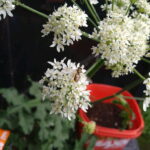
Here we have, as Ian said, “hoverfly, one of the good guys”. Hoverflies are the second most important pollinators, after bees (not just honey bees, all bees!) They feed exclusively on nectar and pollen, so in the course of moving around, they do the good work the plants need them to do. They disguise themselves to look a bit like a wasp, but this is part of their defence. By looking like an insect that could sting, they scare away predators. Some species, as a larvae, feed on aphids. They rely on chemical senses and touch to find an aphid. Once located, they pierce them with a mouth hook, and suck out the insides!
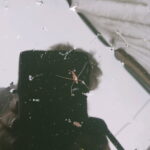
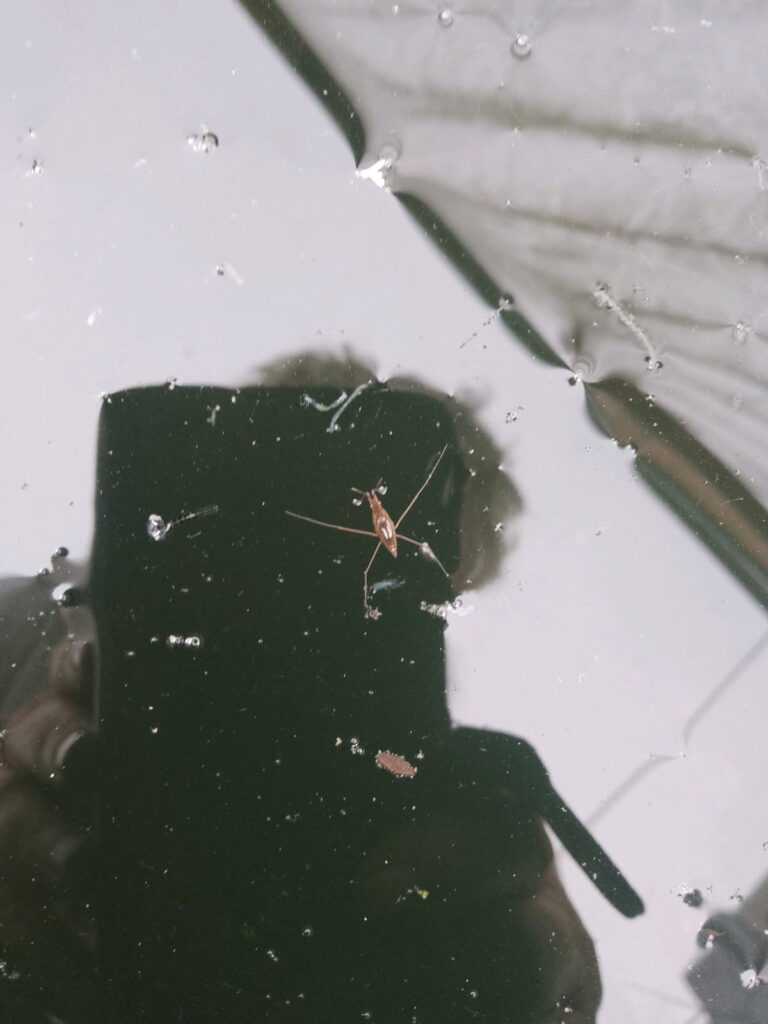
Finally, we have a water boatman or pond skater. Along with Ian’s reflection! Look closely and you will see the boatman’s eyes. See how it balances on the very surface of the water. It does this by having water-repelling hairs on the bottom of its feet. It detects small movements or vibrations in the surface to help it find prey, probably helping to recycle other dead animals back into the ecosystem. There are nine or ten species in the UK.