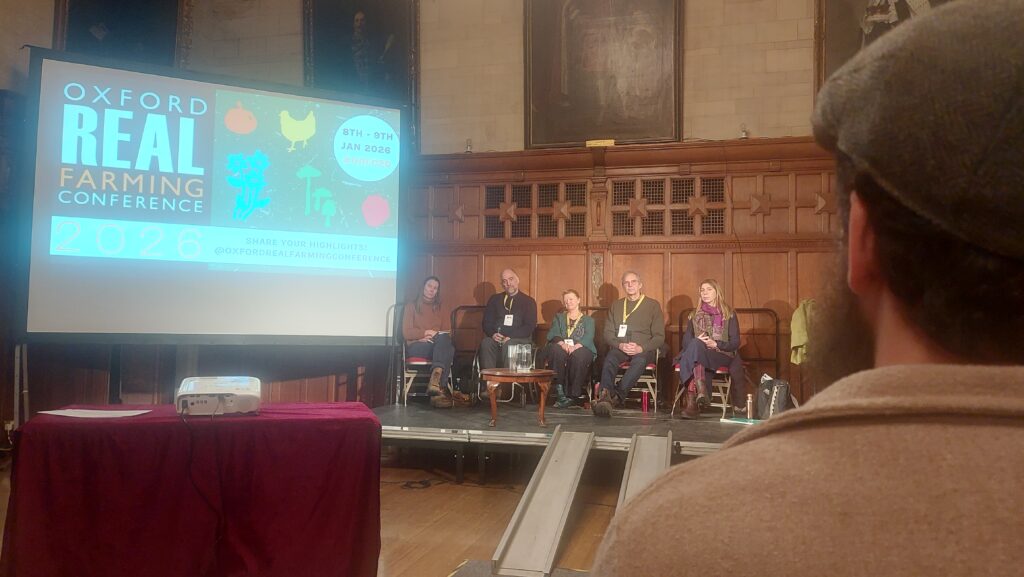
Every January the Oxford Real Farming Conference (ORFC) connects people in the UK and around the globe who want to transform our food and farming system. You can find out more about ORFC here https://orfc.org.uk
This year Liz, one of our workshares – a regular conference goer – shared her thoughts, some insights and inspirations from the this years experience.
Making the long trip down to Oxford in January, with uncertain weather (‘will we get home?’) and far too long on the road requires a certain degree of motivation. I’ve been an online delegate a couple of times, which is more straightforward and less tiring, but completely misses the opportunity to meet people and really feel part of this ever growing movement.
ORFC always runs at the same time as the longer established Oxford Farming Conference. This was its 17th year and it now outnumbers ‘the other place’ by several multiples. It is in danger of becoming a victim of its own success, there were 9 venues and 19 session spaces, and over 150 sessions; it’s a tough job deciding what sessions to attend, and then turning up to find them full can be a disappointment, especially when you’ve walked across town to the venue in the freezing cold!
Topics are very varied and covered themes including Farm Practice, Food and Farm Policy, Justice, and Listening to the Land.
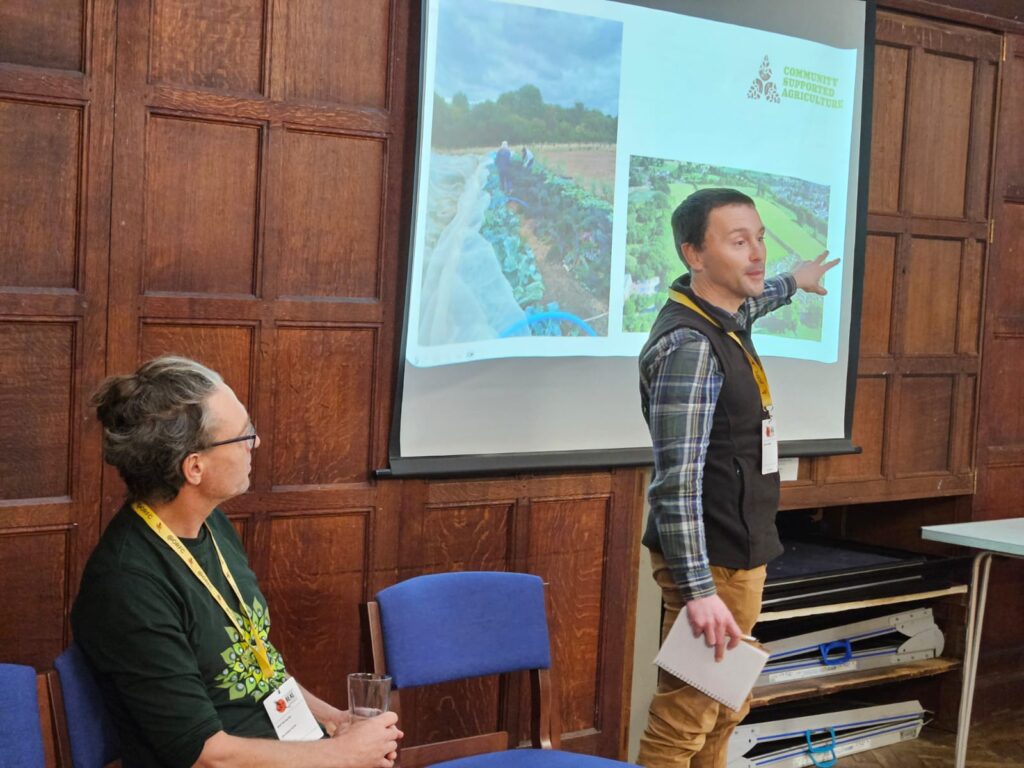
I now attend with my OGA hat on and help out on our stall, talking to interested enquirers and encouraging market gardeners to join us, if they haven’t already. We shared a stall with the CSA Network.
You will be able to access the sessions that were live streamed at the beginning of February on the ORFC YouTube channel (https://www.youtube.com/@OxfordRealFarming).
I managed to attend 4 sessions and watched another online. I also attended a session on the Wednesday evening run by the Wildlife Trusts on the topic of ‘Can We Afford Nature Friendly Food?’ (https://www.youtube.com/live/I-Fnn_7jwY4?si=LpakqZfRRd6kwYc9). The question should be ‘Can We Afford not to have Nature Friendly Food?’ and of course there’s no agreed definition (unlike Organic), but it was an excellent discussion and takeaways for me were that the annual cost of unhealthy diets is now £268bn (Food, Farming & Countryside Commission), and discovering the amazing Dev Sharma, a young man of 20 who was a founder member of Bite Back 2030 (set up by Jamie Oliver). He has an excellent grasp of the big issues around our broken food system. I’m not sure how I’ve managed not to come across him before, he’s inspirational (https://www.devsharma.co.uk/).
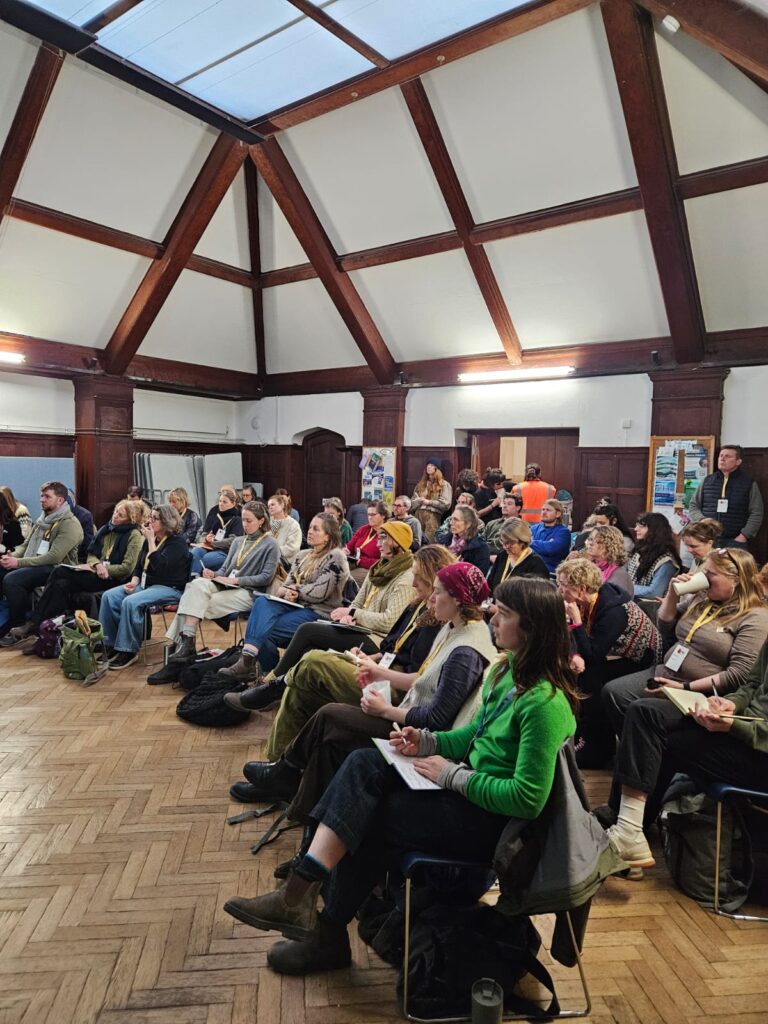
Other insights:
- Latest research on impact of Glyphosate/RoundUp on human health. It causes damage to cells, protein and DNA (cancer risk), alters the balance and function of the gut microbiome, is linked to non alcoholic liver disease in rats at very low doses. Epidemiological studies show high levels of exposure cause an increase in incidence of non alcoholic liver disease, oxidative stress and non-Hodgkin lymphoma. I agree with the ‘ban it’ viewpoint. The discussions have gone on long enough. We know enough.
- Precision Breeding is GM. The Genetic Technology (Precision Breeding) Regulations 2025 were approved in November 2025. The issues are lack of regulation, transparency, monitoring etc. Trials will not require notification. Threatens the integrity of organic and agroecological farming. Find out more at
- A fascinating session on the use of Biostimulants such as compost teas, Gerry Gillespie Spice inoculant, Jadam brew and many more! I will be using at least one of these to bring back life to my own garden after it has been terraced (and disturbed). If anyone is interested in researching this further for potential uses at Go Local that would be really interesting!
- A workshop on growing pulses in the North was led by Josiah from Hodmedods. It was suggested that dried pole beans (e.g. left over from a runner bean harvest) could be a useful addition to the ‘hungry gap’ boxes for small scale growers. Maybe something to think about? I have done this for my own consumption, either using beans specifically grown for drying, or runner beans (in most countries the runner bean is eaten as a whole bean or dried).
That is just a few brief notes from the sessions I attended. It’s impossible to convey the atmosphere of hope, resilience and positivity that pervades the whole conference. The musical entertainment in the Plenaries, and in the evenings over meals from a number of local businesses adds to the general conviviality. This year the musical entertainment included Charlotte Church, and the Shumei Taiko Ensemble.