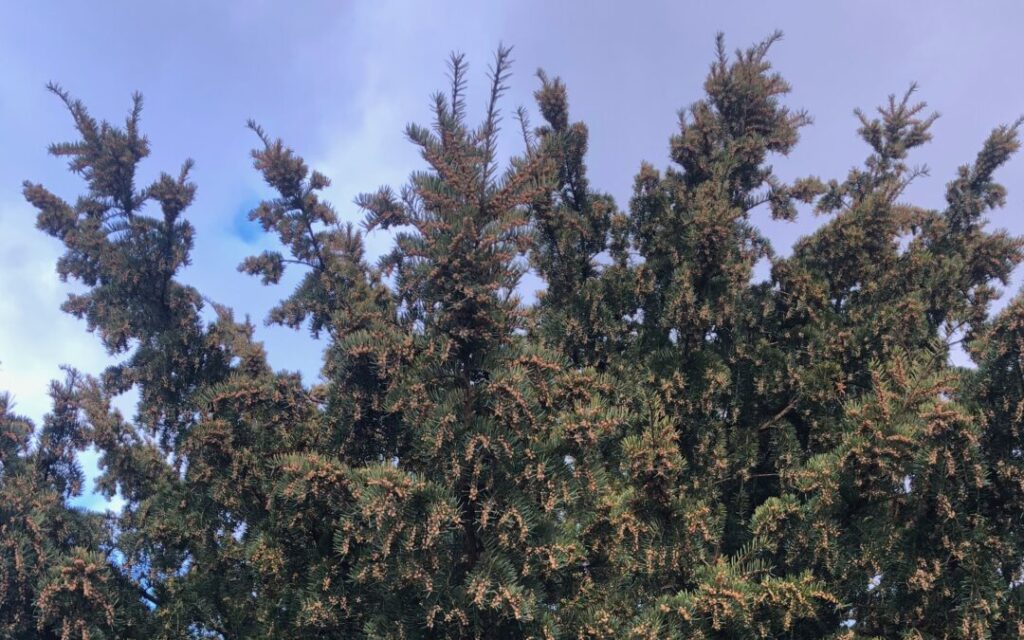
Not all trees are what they seem!
Did you know that some yew trees are male and some are female?
Now is the time to look out for the male ones with yellow pollen, or female ones might have last year’s berries still on.
Yew trees keep their needles all winter and are one of three native conifers – the other two are juniper and scots pine.

In the Middle Ages the close-grained wood was sought-after for making longbows. Soon all the bow-making suitable trees were exhausted, and yew timber had to be imported. So, the old yews left were the poorer trees and their descendants.
Why is it often closely associated with churchyards? There are many theories! Before Christianity people may have believed the yew to be sacred and so it was already at sites of pagan worship. Yew trees are not considered ancient until they are about 900 years old!
The bark, leaves and the seed are poisonous to humans, but the red fleshy outer seed will often be enjoyed by birds, such as blackbird, mistle thrush and song thrush. Yew hedges are often popular nesting places too.