Wind from the east is good for neither man nor beast.
Nor growing vegetables
A cold wind can play havoc during the growing season and over the years many techniques have developed to combat this. Big walled gardens, heated in some cases, greenhouses, cold frames, right down to individual cloches all help create a mini paradise for plants.
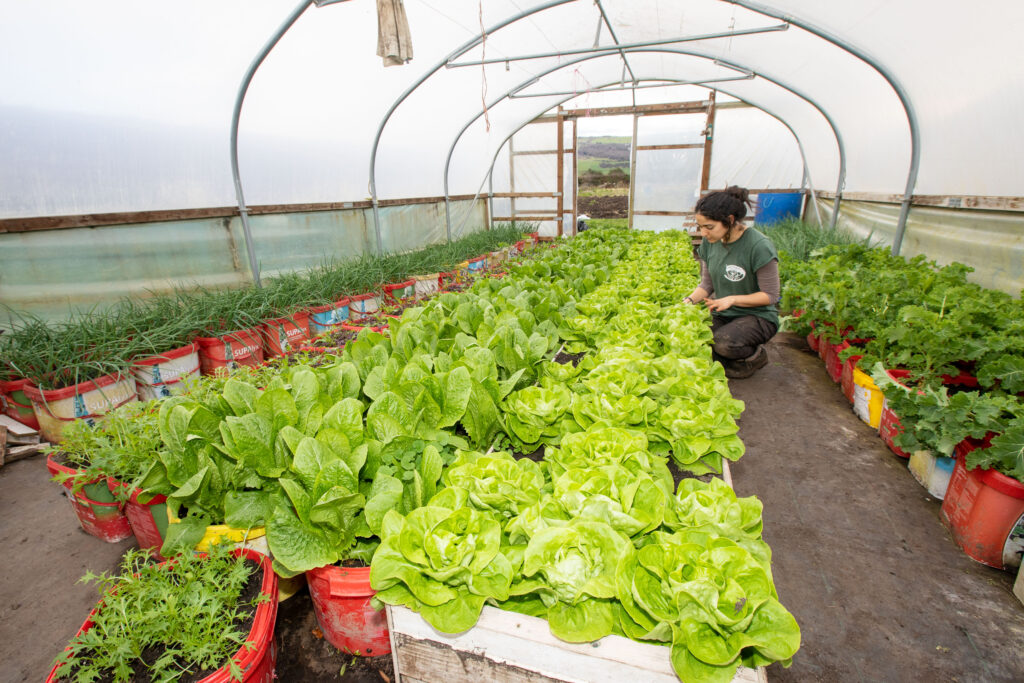
And we rely on our polytunnels to prolong the growing season, protect temperature sensitive plants and give a greater control over soil conditions such as watering or feeding. The temperature difference between inside and out can be quite striking, the place you want to be in winter and avoid on a bright sunny summer day!
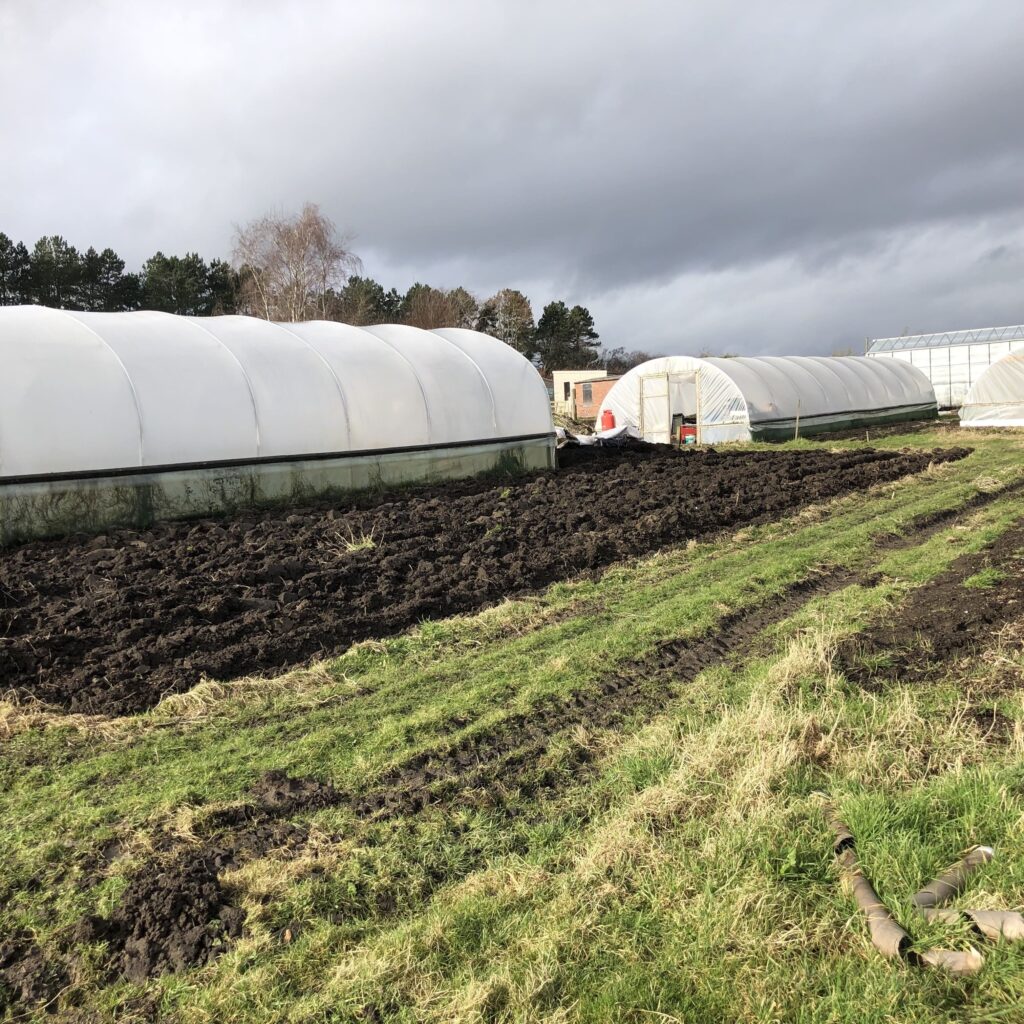
At our Ovington site we have 5 polytunnels ranging from 10m to 22m long. So how do we use the tunnels?
The tunnels in January or February gives us a head start. Sowings of onions or early brassicas such as cabbage in the propagator can be grown on in an unheated tunnel. This gives, strong young plants for hardening off, before transplanting outside as soon as the ground is ready.
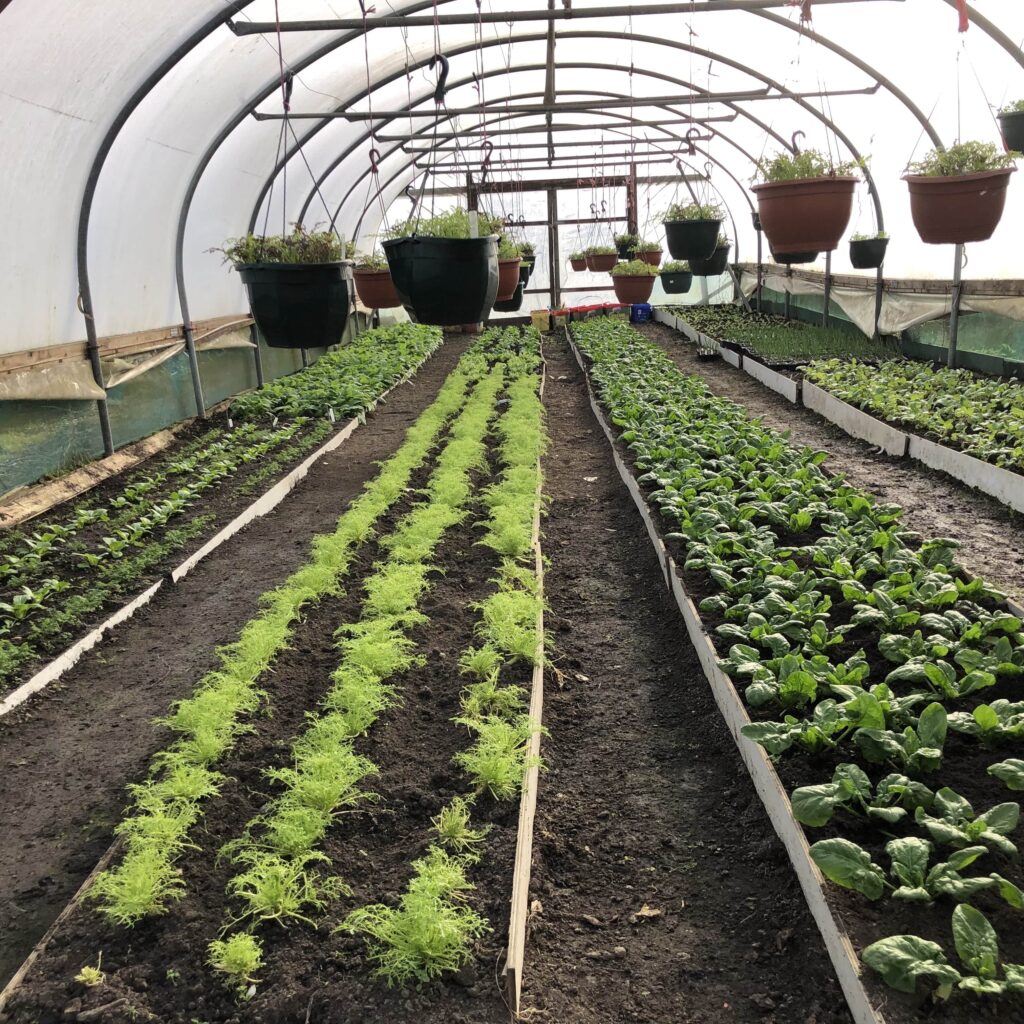
In February direct sown radish and lettuces can be started indoors. Plants intended for early harvesting; chard, mustard and spinach can also be sown in cellular trays and planted indoors in March. They will give a harvest in May when the tomatoes will be interplanted.
The summer crops will gradually take over from our late spring harvest. These crops: tomatoes, cucumbers, chillies, sweet peppers, radishes, French beans and courgettes, will pretty much fill the entire indoor space buy the end of July. We also underplant with lettuce, herbs or dwarf French beans, not just for the extra crop but also to provide ground cover to preserve moisture and keep the soil active.
As the summer season ends, we come to the difficult part of polytunnel management.
Deciding when to pull out the actively producing plants to replace with the overwintering plants. Too soon and you lose valuable crops; too late and your overwintering plants won’t be large enough to give a harvest soon enough.
October and November tend to be a mini hungry gap in the polytunnels but its less notable as there are still plenty of crops in the ground outside. The newly planted crops will slowly grow and start being harvested from December through to May with Chard, spinach, mustard, kale, komatsuna, pak choi, and lettuce finishing with a big green flourish before it starts all over again.
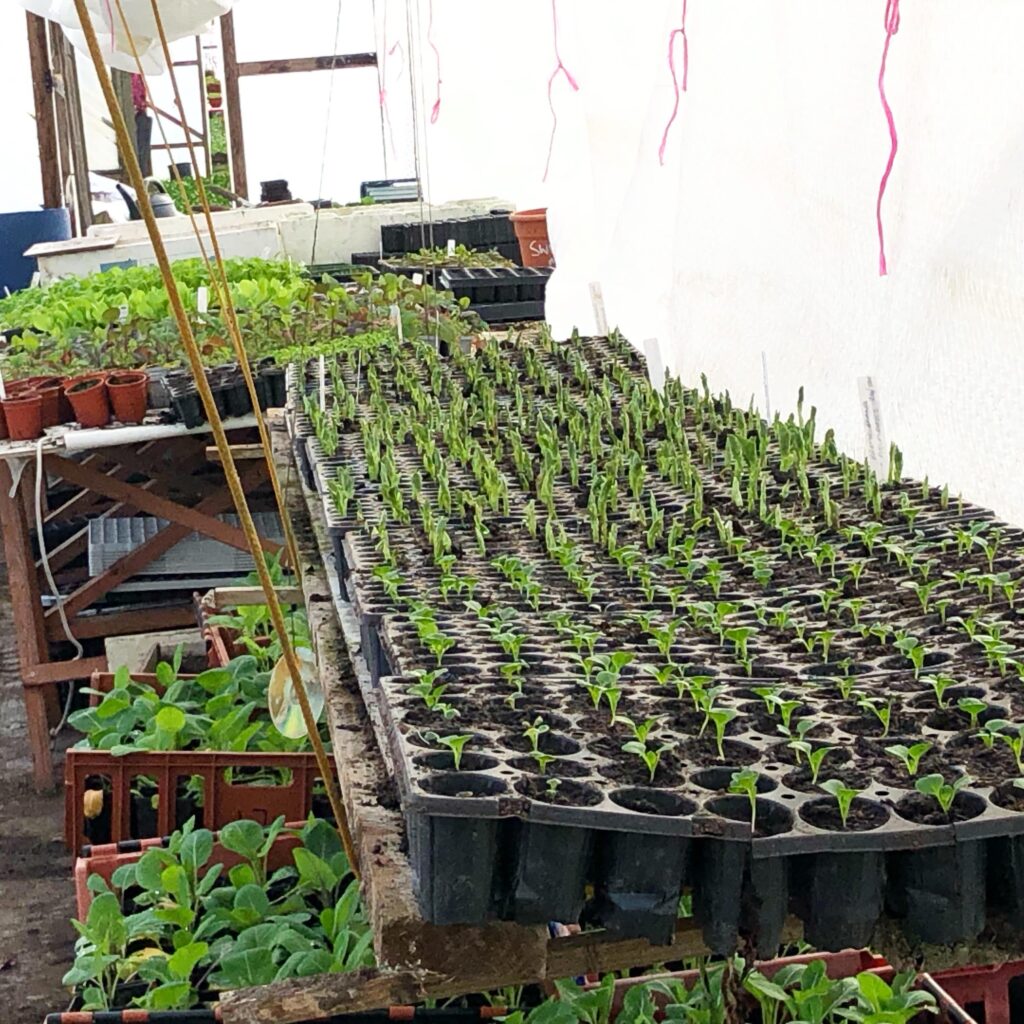
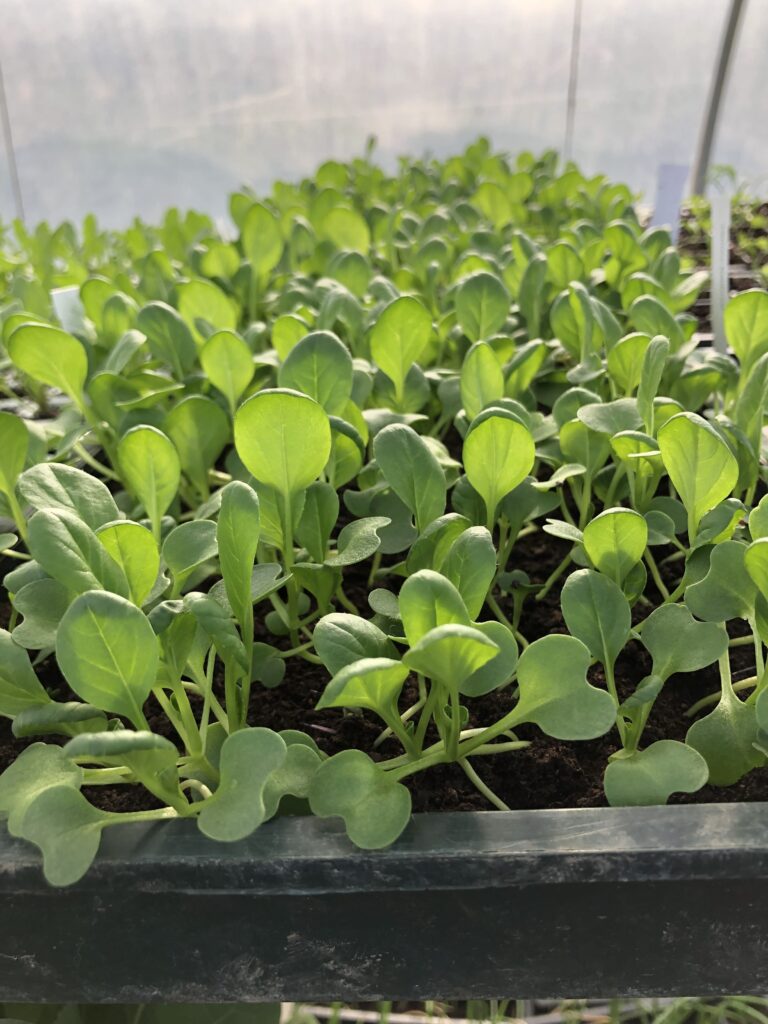
We keep one of our tunnels for seedling care. It has a tent inside made of bubble wrap and is heated with a small greenhouse heater to keep the temperature above 2C to prevent freezing. A favourite workplace between January and April!