Ever wondered what the connection is between Father Christmas and flying reindeer? Why and how do reindeer fly, even?
It is thought that it can be traced back to traditional reindeer herders of northern Scandinavia. The people here are called Sammi and move between northern Finland, Norway, Sweden and Russia. The reindeer eat lichen growing from the tree branches when there is heavy snow on the ground. Tradition has it that the herders fed their reindeer a type of red and white mushroom with psychedelic properties.
This made the reindeer have a changed sense of reality, making them leap about, giving the impression of flying.
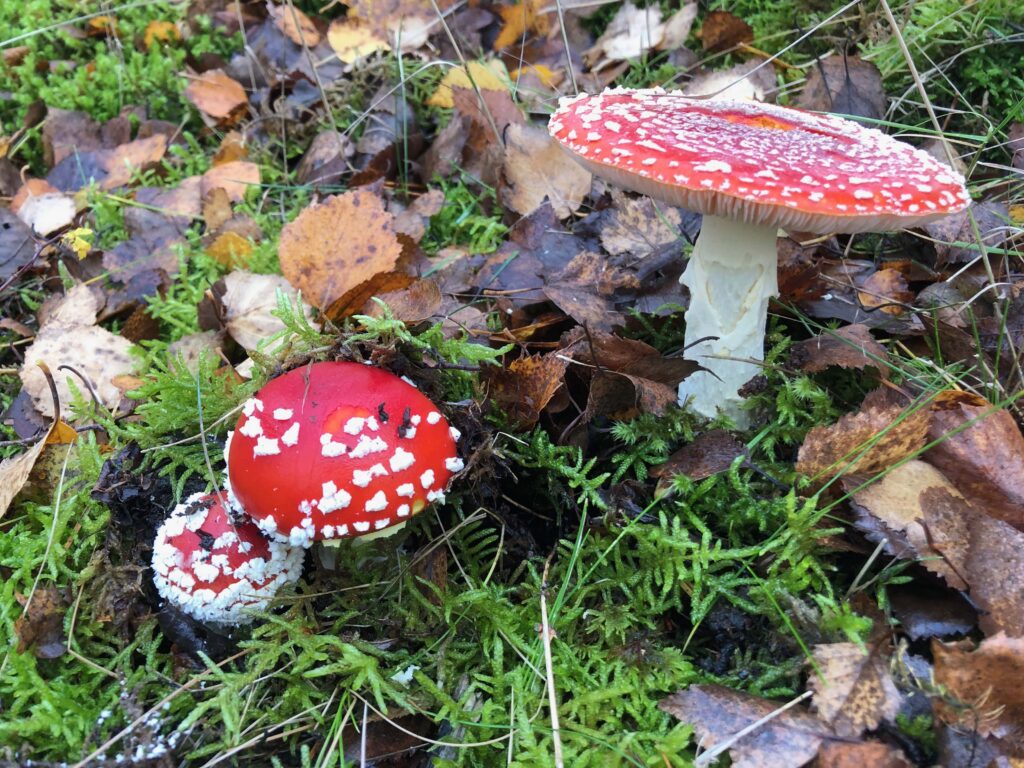
We think the fungi is what we call fly agaric – the traditional red and white ‘toadstool’ that we would all draw if asked to draw a fungi!
It gets even more interesting… The herders would then collect the reindeers’ urine, and drink it. The fungi is poisonous to humans, but by passing through the reindeer first, it is made safer. The reindeer herders could also have the hallucinations.
Closer to home, fly agaric is often found in birch woodland, sometimes pine or spruce. Underground is where most of the fungi is. Only its fruit is the part we see! It lies in wait underground until – mostly autumn – after a damp spell. The underground parts of fungi are known to form connections with and between trees. This has been called the “wood wise web” and some studies show that trees can even communicate with each other this way. The fungi gives the tree nutrients taken from the soil, and in return the tree gives the fungi sugars from photosynthesis.
The white spots on the red top are simply the ‘left over’ bits of the tissue that the toadstool emerged from. After it has rained, they are sometimes washed off. Possibly the bright colours are the inspiration for Santa’s red and white suit!
In the rest of the world, fly agaric has a long history in other ceremonies. For over 4,000 years it has been the ingredient in a sacred drink in India and Iran called, ‘soma’. In Siberia, shamans give it as a gift in late December. In many fairy tale stories the toadstool reappears, for example in Alice in Wonderland she is given some to eat.
Squirrels and slugs can eat fly agaric without any toxic effects, as well as some flies. Santa being pulled by a herd of flying slugs doesn’t look as good, does it! If so, there would be many, many sleighs able to set off from The Fields this December!