
Growing Through a Dry Summer: Adapting, Experimenting and Learning
So, this is October. The fields are starting to slow down, and we’ve had time to look back on what has been — yet again — an exceptional growing year. Last year was too wet; this year, too dry. There’s always something, isn’t there?
But it’s also been one of our most interesting and adaptable seasons.
A new way to plan – or not plan
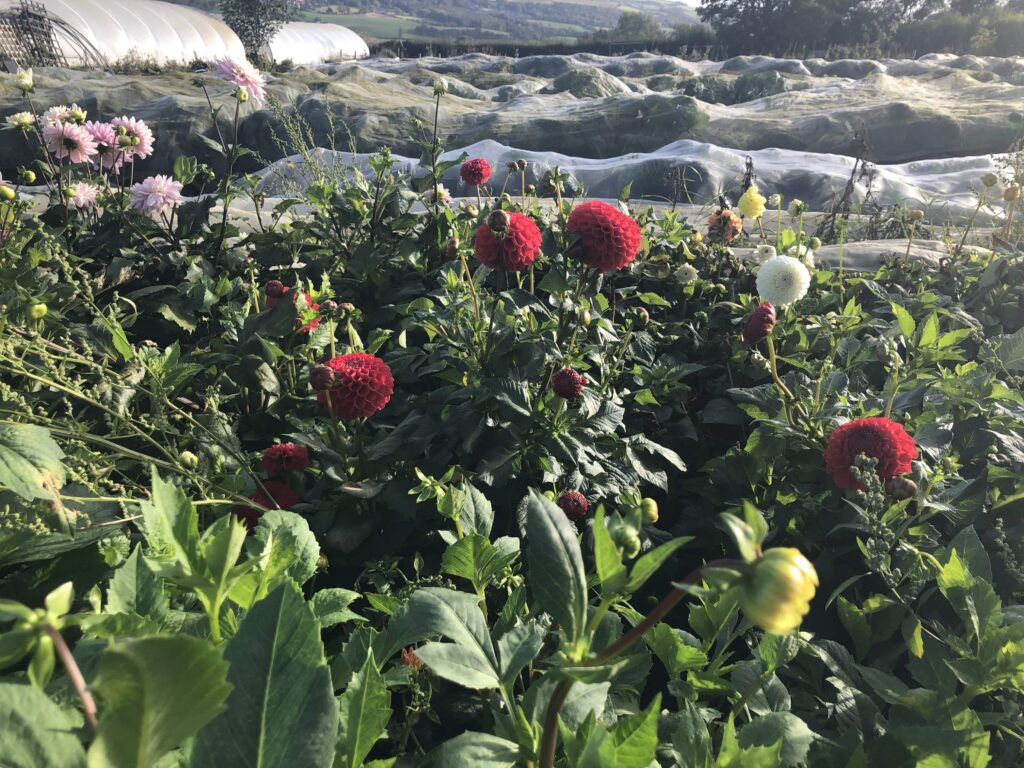
This year, we decided to grow differently. Rather than following a strict sowing plan, we took a more flexible approach — what we call “overgenerous sowing.”
That meant sowing what we had room for plus a few extras — sometimes a couple of hundred seedlings from different varieties that could fit the same rotation. For instance, instead of one cabbage type, we sowed three.
Why? Because plans rarely survive contact with the weather. Beds aren’t always ready when you want them, and sometimes crops finish earlier than expected. In previous years, we’d found ourselves with seedlings ready to plant but nowhere to put them.
Now, by having “spares,” we can slot plants into gaps as they appear. Beds don’t sit empty, and nothing goes to waste. It’s a more responsive, less rigid way to grow — one that follows the season, not the spreadsheet. Although occasionally, things grew to plan — so the spares ended up on the compost heap.

Adapting to the season, not the calendar
A good example? Tomatoes.
If the spring is cold and the tunnels are still full, there’s no point sowing tomatoes too early. They’ll sit in pots, growing taller but not stronger, and end up producing fewer fruits. Sowing and planting to conditions rather than dates gives them the best chance.
It’s the same with squashes. Normally, we sow them at the beginning of May, but this year frost lingered. Waiting until the weather settled made all the difference — though it meant a few delays. Where squashes didn’t go in, we swapped them for beans or short-term crops, keeping the rotation flexible.

Managing without water
This was one of the driest summers we can remember, yet we chose not to water our outdoor crops. That might sound risky, but it was a deliberate part of our soil-first approach.
We’ve focused on building soil health — adding organic matter, keeping the soil covered, and disturbing it as little as possible. Healthy soil holds onto moisture far better than bare, tilled ground. It’s not perfect, but it works: we saw smaller yields, yes, but no outright crop failures due to drought.
Interestingly, the only place slugs gathered was where we did water.
Battling the butterflies
Our biggest challenge this year wasn’t dryness — it was butterflies.
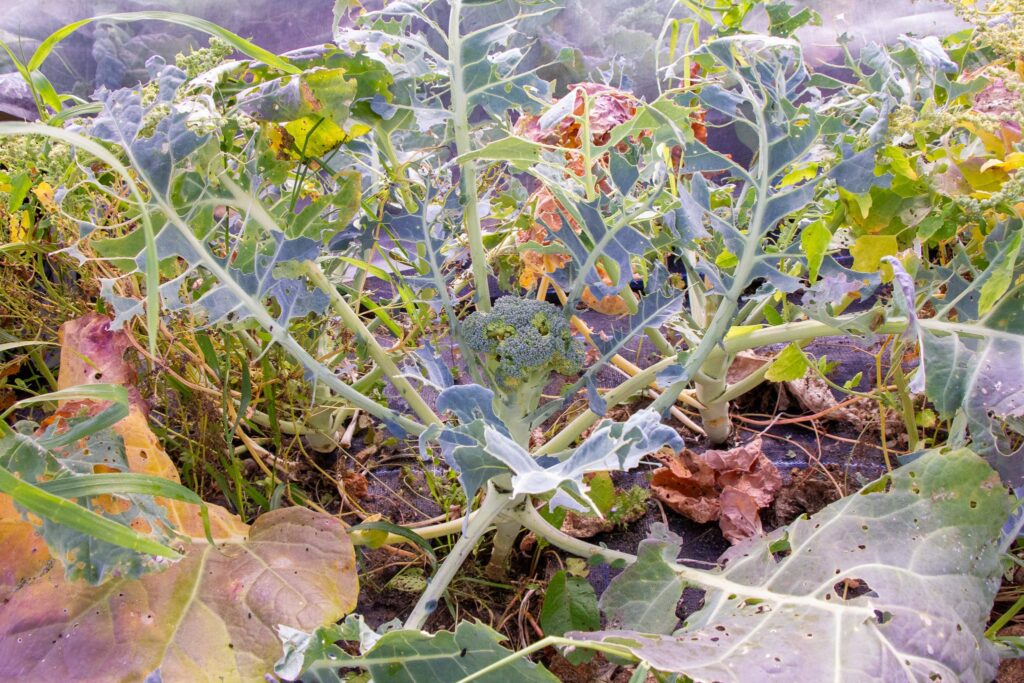
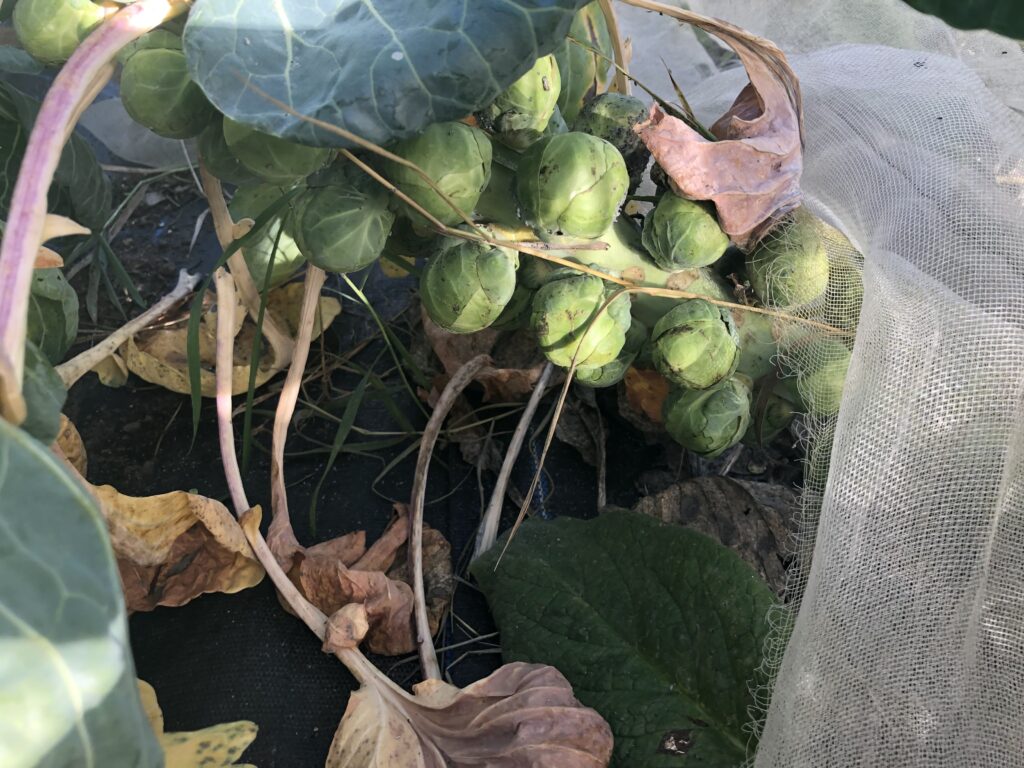
Cabbage Whites were relentless. Without enough hands for caterpillar-picking, we lost several brassicas. Even in the polytunnels, we found large caterpillars right into October!
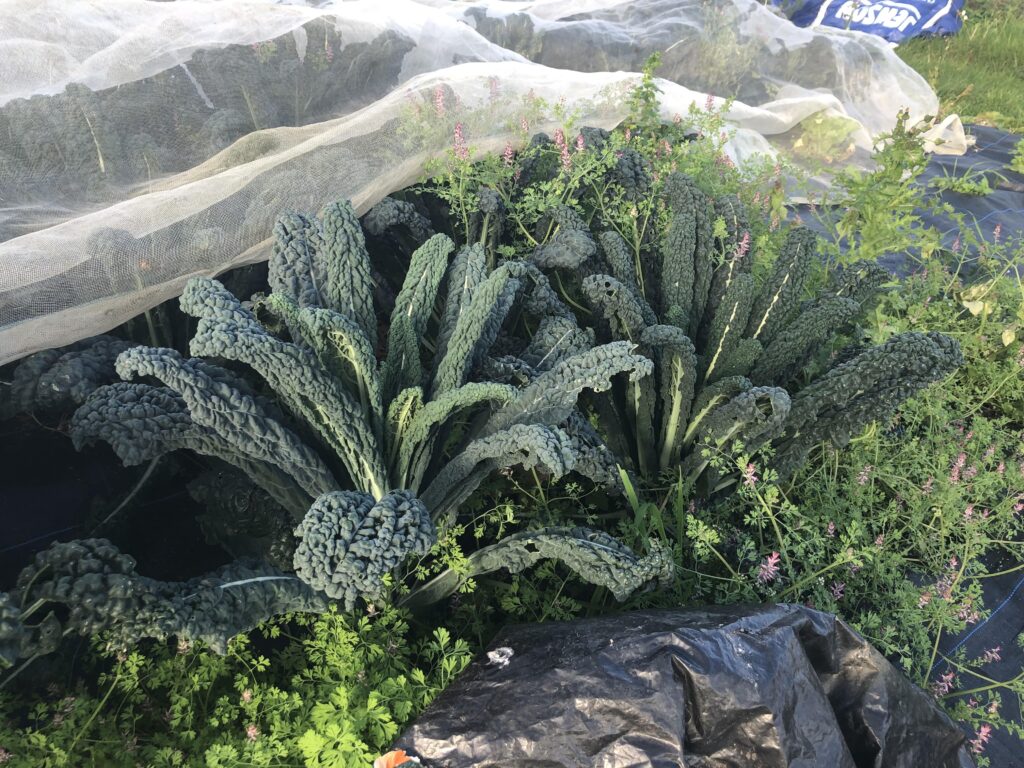
One discovery worth sharing: Savoy cabbages make great decoys. They seem to attract the butterflies, while red cabbages are left untouched — pigeons avoid them too. So next year, we’ll plant Savoys around the edges to draw pests away from the main crop.
Surprises, experiments, and lessons
We planted 104 different varieties this year — everything from brassicas to melons. Around 60–70% reached harvest, which isn’t bad considering the weather.
There were surprises too.
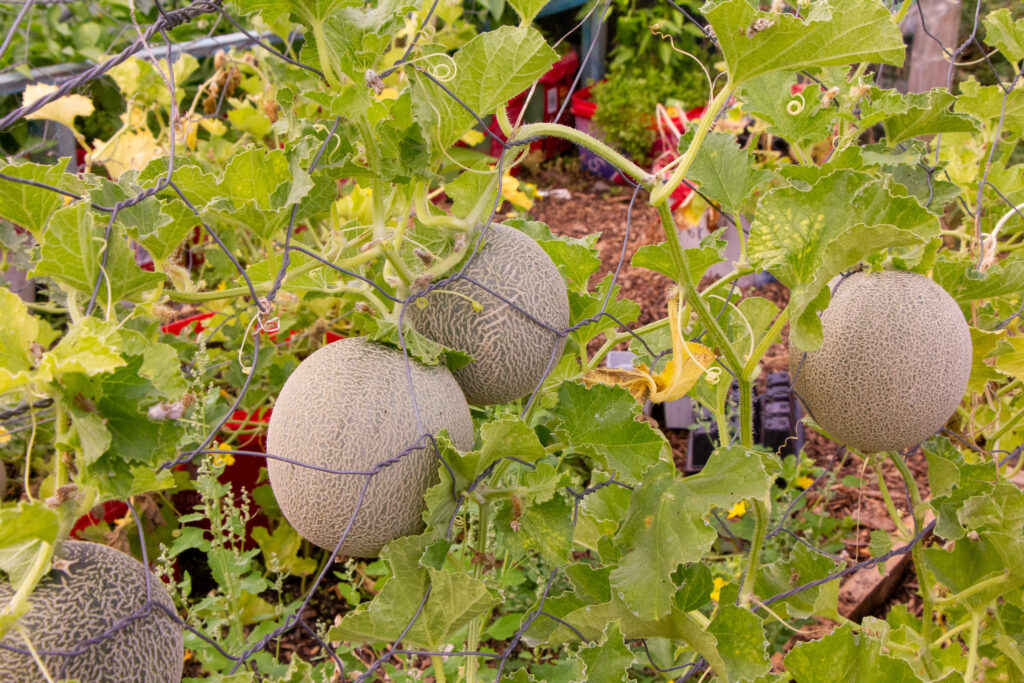
• The melons were delicious (36 instead of the 80 we’d hoped for, but every one was worth it).
• The new French–Runner bean cross was a hit — the flavour of a French bean with the size of a runner.
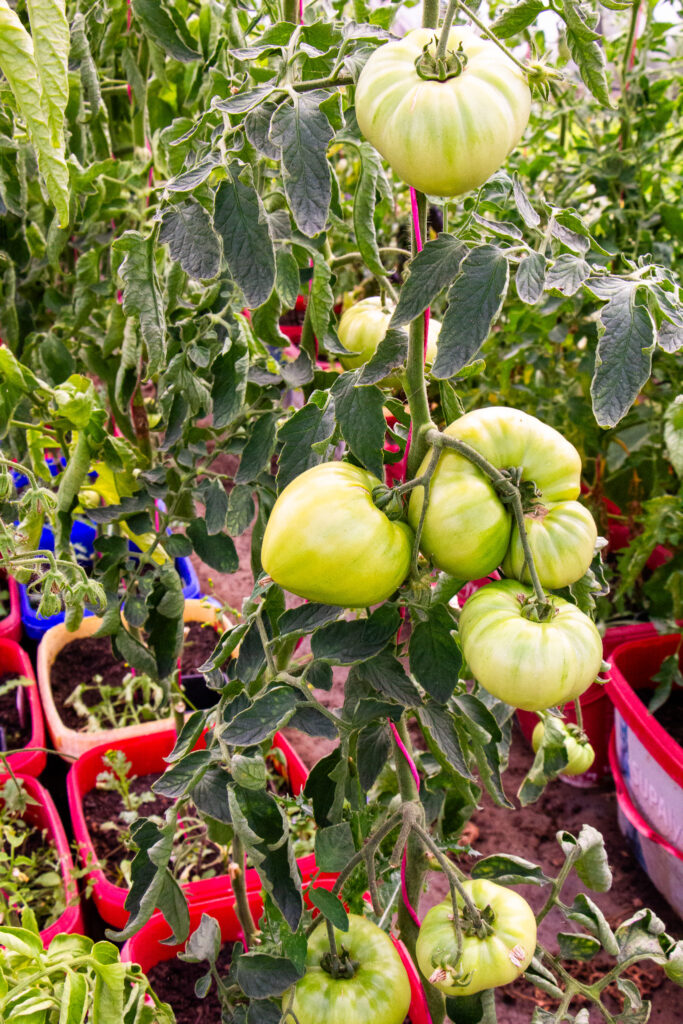
• Beef tomatoes and dwarf beans were popular additions after member feedback.
Of course, not everything went to plan. Woolly aphids, pigeons, and mildew under protective membranes all caused trouble. And early carrots and parsnips refused to germinate in the dry soil. Some finally sprouted months later — too late for a crop, but enough to prove the point: patience doesn’t always pay off in farming!
Reflections and what’s next
Overall, it’s been a good year — not perfect, but productive. We’ve had more in the ground, less waste, and plenty to harvest from. Key lessons?
- Be flexible. Don’t let a plan rule the season.
- Build soil health — it’s your best insurance against extreme weather.
- Observe and adapt — there’s always something new to learn.
- And most importantly, make a decision. Even if it’s not perfect, doing something is better than hesitating. As one of our growers says: “The only difference between a bad grower and a good grower is the one who’s willing to make a choice.”
Now, as we look ahead to winter, we’re already planning the next round — analysing what worked, what didn’t, and which seeds to try again. If the predictions are right, we’re in for a long, cold winter. That might just be what the soil — and the slugs — need.
Every season brings a new challenge. And that’s what makes growing so endlessly rewarding.


