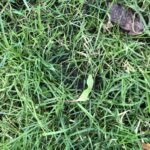
OK, so the weather is still very grey and cold. But from now onwards we can start looking out for signs of spring! Have you noticed any yet? Maybe make it a mission on a walk or at the Fields to have a look out for something and tell us about it!
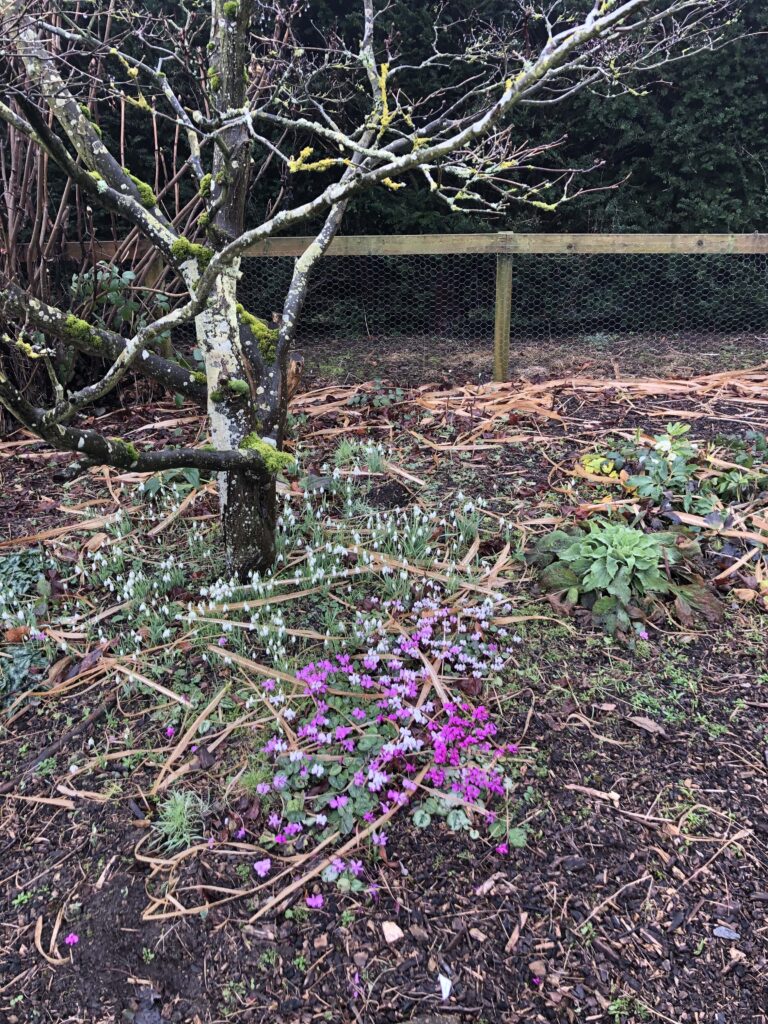
The cover picture for this post was taken at Go Local on 10th February. Here we can see cyclamen, snowdrops and hellebore. Who doesn’t love a snowdrop?! There are actually 5 different main ones to look out for. The most common ones aren’t actually native to the UK but are introduced, even though people love to see them. The common snowdrop has a green V shape on the inner petals to look for. (Find out more about the different snowdrops on the NHSN webapge).
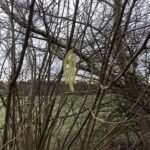
What about hazel catkins and hazel flowers? The catkins are the male parts and the flowers the female parts. Quite hard to photograph on camera phones! Especially in all the winds we have been having. So, maybe you know a hazel shrub that even starts getting ready for spring in December, so maybe they are not one of the harbinger of springs we hope they are! Still, great to notice though! Once you have seen the amazing female flowers one year, you will never mistake them again.
Isn’t it amazing that plants and animals are getting ready for spring when the weather still seems quite wintry?

However, the days are definitely longer. We are over 7 weeks past the shortest day, and it is at this point in the autumn when we change the clocks. Just think, if we changed the clocks now it would be light until about 6:30pm!
This year, the Field Studies Council is working in partnership with the Royal Society of Biology on the Signs of Spring survey 2024. This is a survey asking us all to record ten signs of spring. The signs to look out for are:
Bluebells, Bumblebees, Butterflies, Daffodils, Dragonflies / damselflies, Frogspawn, Hazel catkins, Ladybirds, Lawn – first cut, Snowdrops.
We could write a whole article about ladybirds, so look for that later in the year!
Meanwhile here are a few recent sightings from us…