And it’s still raining, though Ian is not panicking… yet… there is definite frustration on the fields!
Although modern growing techniques mean we can now grow our food almost all year round, traditionally in the Northeast and Scotland home grown vegetables weren’t planted until after the Hiring fair which took place around Whitsunday, around the middle of May. This was because labourers didn’t know where they would be living for the following year until they had been given a job. In Modern times planting dates changed to around Easter to fall in with time off from work.
The wet weather makes it difficult to sow direct or plant out tender plants, the mud sticks to the tools and even if we get the seed sown its likely they would rot in the cold damp ground.
At the moment our best ground is the previous year’s dug ground with a topping of what we call lasagne beds – a bed layered with, manure, paper sacks, and compost. This is slightly drier as it’s better drained which allows us to plant seedlings started in the propagating cupboard.
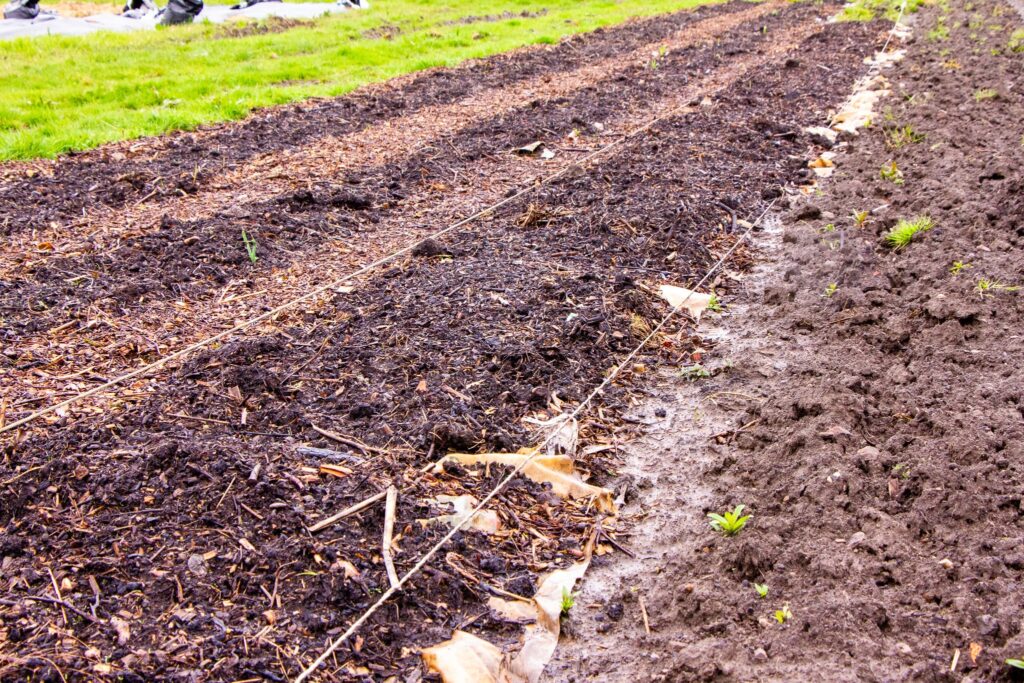
Unfortunately, these beds are not where the young plants were supposed to go! One of the benefits of smaller scale growing is that we are able to chop and change to suit the conditions. So much for the months of careful planning – thank you Nature!
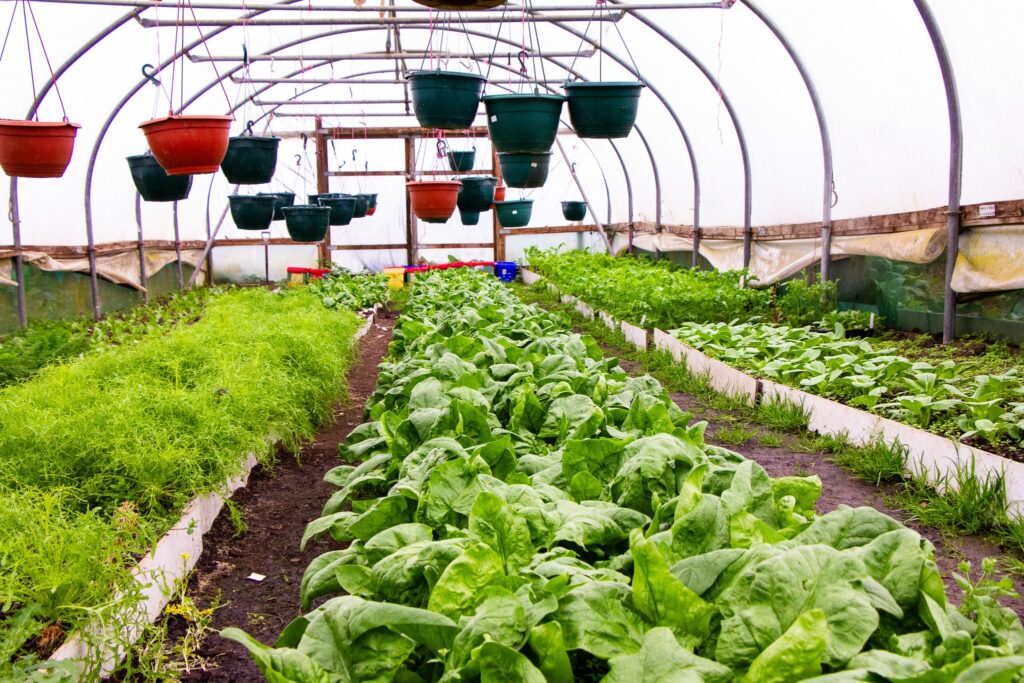
Despite the weather planting is going ahead in earnest, not least because the polytunnels are full of young plants ready to go out and we need the space for more seeds to be sown. Most of the early onion sets are planted and we are about to move the January sown seedlings into the cold frame to harden off.
Plants that have started life inside need to be gradually exposed to outside conditions. Young plants are moved from warmth to a cooler place with shelter ed place such as a cold frame and over 10 days introduced to the elements before being planted in their final positions where they will grow and eventually be harvested. Ideally this starts when the weather is slightly milder and no frosts are imminent.
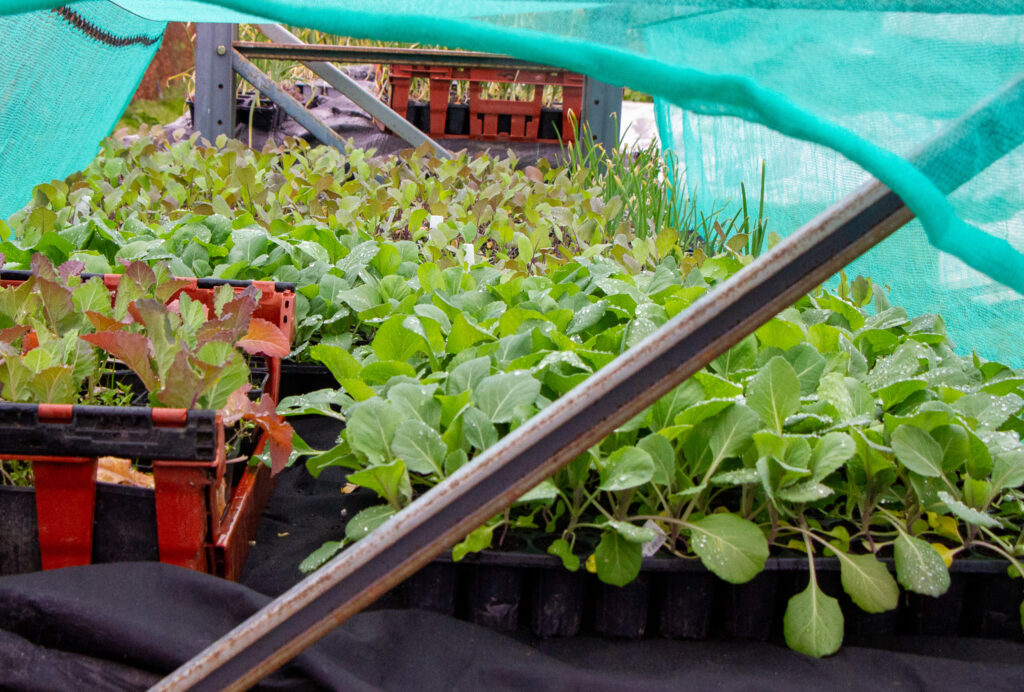
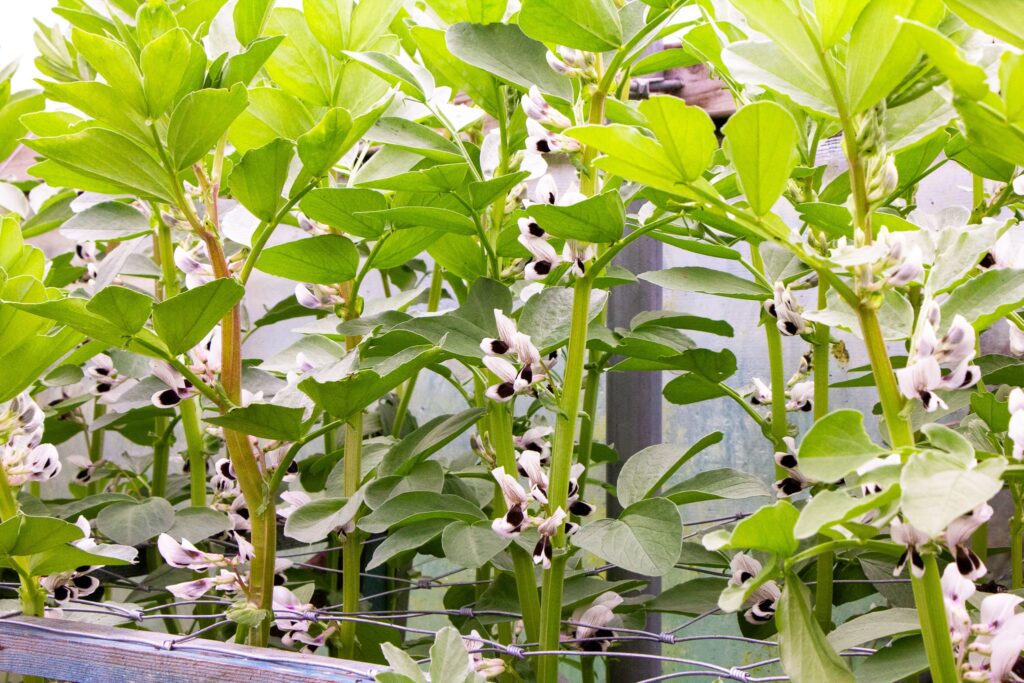
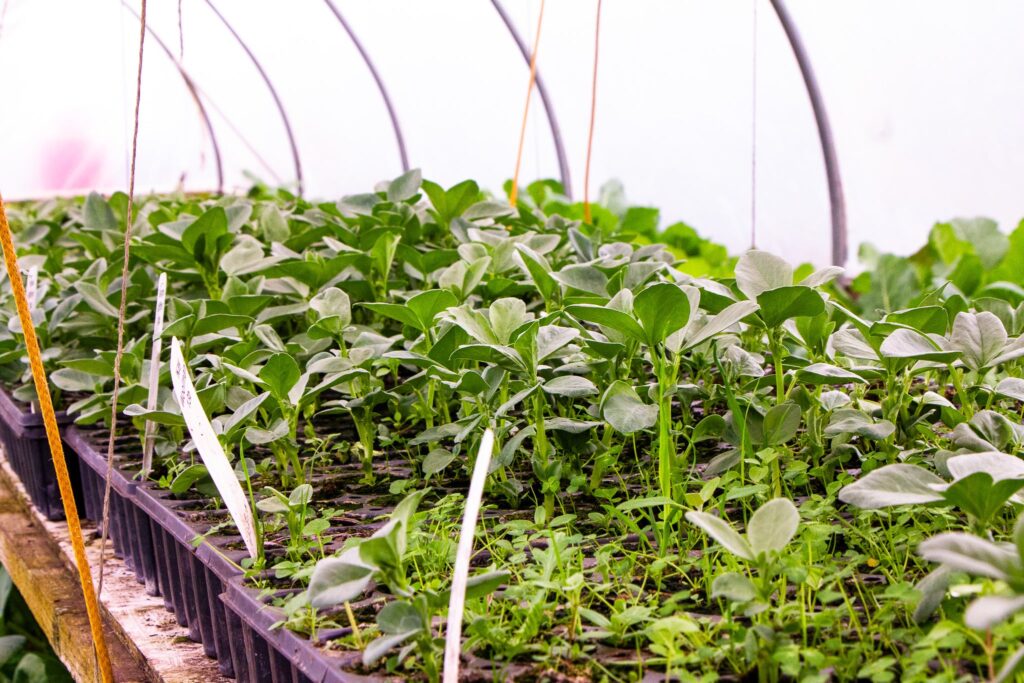
April and May are the busiest months for sowing. Most of the summer brassicas, cabbage, calabrese, summer cauliflower, kohl rabi, and turnips are all started inside. We will also start the cucumbers, squash, courgettes and the successional veg, cabbages, beetroot chard spinach rocket lettuce fennel broad beans and turnips. Hoping to deter the mice, the French and runner beans are being started on our hanging shelves. When we plant the beans out we’ll sow up to 4 beans in between each plant; as the rhyme goes; one for the mouse, one for the crow, one to die and one to grow. Often two will grow, if more make it, we remove the weakest one.
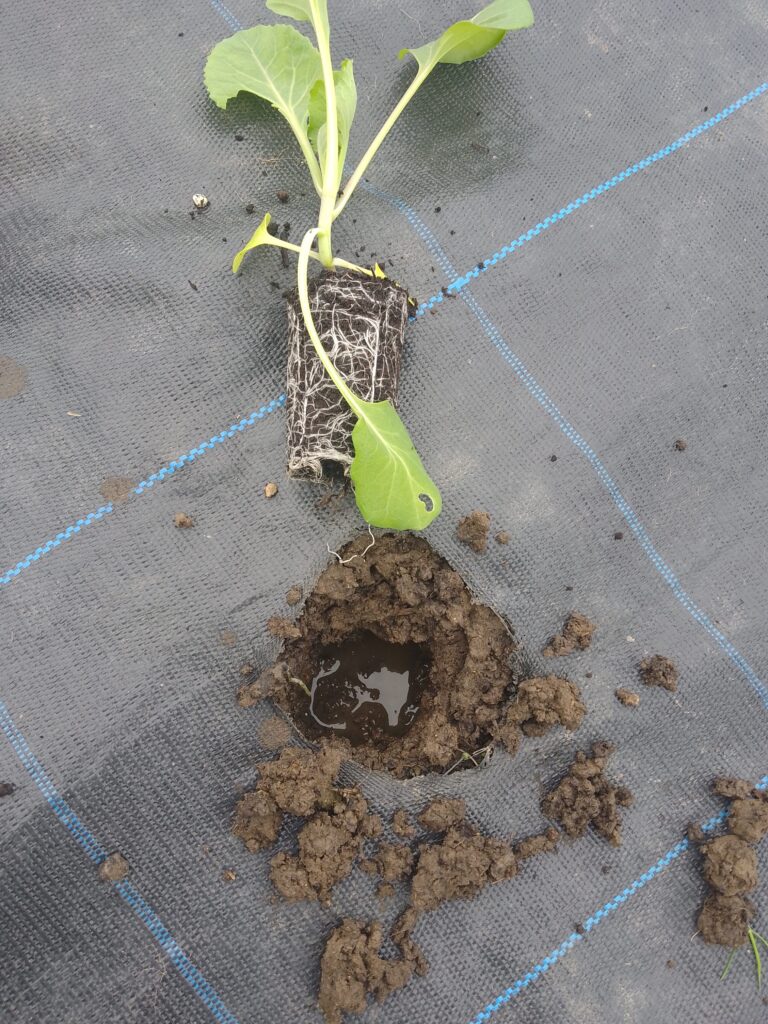
And then, Ian sent this photo with the caption ‘desperate measures’. With a relatively few dry hours, over-full tunnels and crowded cold frames a decision to plant some cabbages was made. And what do you see in the hole? Cabbages aren’t known for their ability to swim! which means we must hope for a few more dry days to give them the best chance.