The spring this year has felt very stop-start; but Ian the grower actually says inside the polytunnels it hasn’t been too bad … by which he means hasn’t been too cold. True, we have had hardly any frosts or snow. But for those of us out in the elements, the wind and the constant wet has felt cold. Hasn’t it?
All the more joy then taken in every sign of spring.
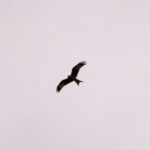
Chris saw this red kite hovering, maybe hunting (would it eat slugs?). She felt like giving it a name. What about Kitey Mac Kite Face? See its lovely deeply forked tail? That is the tell-tale sign of the red kite. It was saved from national extinction and is now doing well in various parts of the UK, including Rowlands Gill area. See the map of distribution here to see how special our local population of red kites is, on the RSPB website. And listen to their calls on this interactive map called Xeno Canto. They mostly eat carrion and worms, sometimes they will eat small mammals. Hmm, maybe they could be tempted to eat slugs after all, and leave our worms alone?
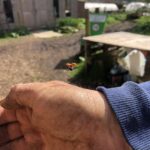
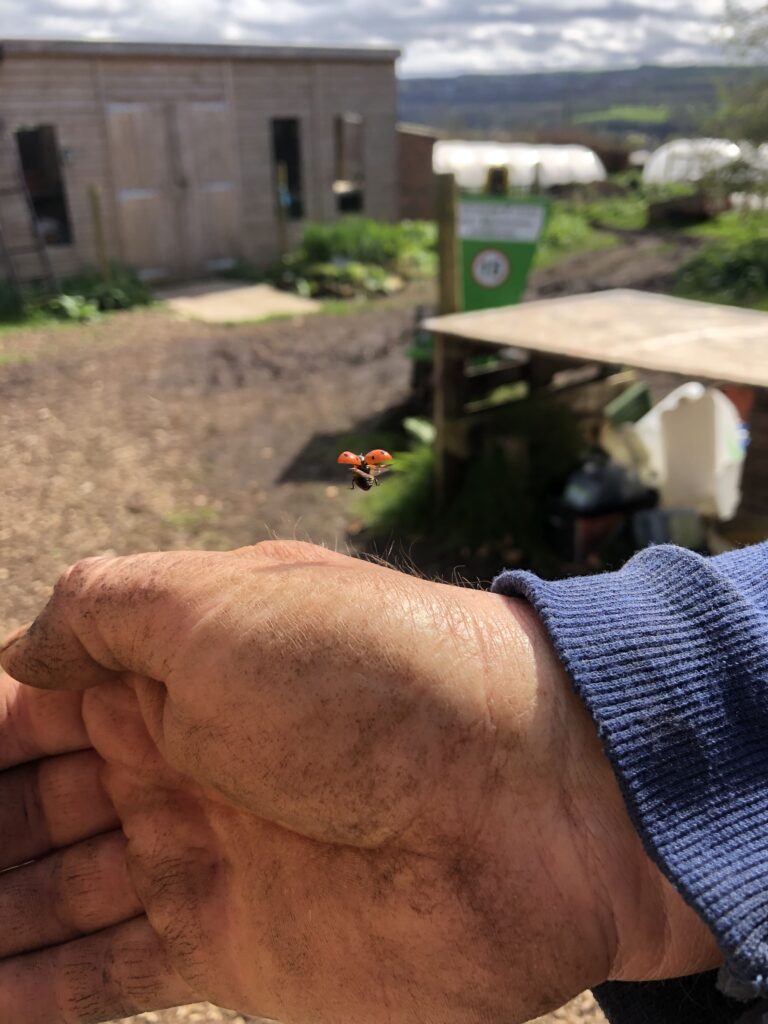
This 7-spot ladybird was posing for a photo on Ian’s hand, when she decided to fly off at the last second, and we hadn’t even said the rhyme about flying off home to check there is no fire and her children aren’t gone! It is probably my best photo of the year so far, and it is just a lucky one! Yipee! Maybe she was just pleased that on this day there was a little warmth in the air, and it seemed everywhere we turned there was life buzzing and bursting. Ian seems happy to see any ladybirds, happy that their larvae are voracious carnivores, helping eat blackfly. We will record madame coccinelle on i-Record.
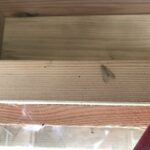
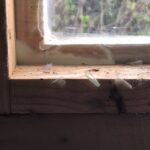
Finally, lacewing. They have been seen in quite good numbers in our new Shed Quarters. Again, many species are active predators of pests as larvae. They can inject digestive juices into prey like aphids or caterpillars. The organs of an aphid are then dissolved in just over a minute. The lacewings in Shed Q are adding themselves to the food web in turn, by becoming part of a spider’s larder. Although, sometimes, they can escape spider webs, because they are so light, they don’t set off many vibrations that alert the spider. Giving them time to bite through any strands of web! When they not in sheds, they might get eaten by bats. Again, they have special skills to defend themselves – they have two “ears” at the base of their front wings (they have 4 wings). When they ‘hear’ the echolocation sounds of a hunting bat, they can close their wings and quickly drop down.
Tune in again soon folks for the next post, about companion planting, red dead nettle, white dead nettle, and a snail.