14th November 2022
It has been an extremely busy and bountiful Autumn Harvest this year with some real success stories such as our giant cauliflower, some challenges faced such as the slug damage on some winter brassicas like winter kale needing us to replant a few times, and a new and exciting project in creating a new type of seed compost.
A period of transition in planning and planting seasonal variations this is a time of looking ahead to next year, which has required some ‘office work’ by Ian and Jala our wonderful Go Local Food growers.
The unusually warm Autumn weather and little or no frost has helped the growth of many varieties, with our brassicas fairing particularly well this year.
The warm weather is not always a good thing though as it has meant that the early spring cauliflowers are producing 5cm florets now instead of fantastic heads in March/April.
Broad beans have also started flowering which won’t produce any pods now. They haven’t been wasted though as they were used in the salad mix.
These are our featured crops from September through to December this year which our growing community have all enjoyed in their vegetable boxes
Pumpkin, squashes, basket of fire chillies, spicy winter salad mixes, spinach, chard, pak choi, potatoes, cauliflower, cabbages, brussel sprouts, beetroots, lettuce, swede, lettuce and winter radish
We have put a together an article of the top 10 harvest highlights, updates, challenges, facts, and tips over the past few weeks, including what’s happening in the propagator, poly tunnels, and what we’re planting in the beds.
We hope you enjoy and always encourage feedback and questions that Ian and Jala might be able to answer for you.

- The Transition and Planning – Time Well Spent
The last quarter of the year is all about the transition from summer to winter crops and this takes a lot of consideration of both timing and planning.
Balancing the timing of the transition of crops can be tricky. We on one hand would like to extend the summer crops growth for as long as we possibly can but at the same time need to be careful in not delaying the planting of the winter crops. We try to avoid this by taking out the popular summer crops over a several weeks and planting the beds up as they are cleaned. For instance, we had 4 rows of tomatoes in the bottom tunnel and aimed to take out 1 row a week and plant successionally grown spinach in their place.
If we leave planting of young hardy plants too late then they tend to not start growing well until the end of February, this leaves us at risk of having less to harvest midwinter.
The challenge is more about giving the winter crops enough of the last of the warmth and longer daylight hours to properly establish so that we get a crop out of them. But of course, the temptation to keep those tomatoes and cucumbers in a week longer is always strong.
This year we have left the winter crop planting a little later than in previous years. This has just been out of circumstance rather than weather conditions; the warm spell has meant that although we sowed the seeds around the usual time some varieties have grown quicker than expected and have gone past their best planting stage which meant we had to adjust our harvesting plan.
Some pak choi got too leggy so it was harvested as salad leaf rather than a full plant later in the season. We ended up resowing so the plants were not ready when we would normally have lifted summer crops. However, the late season warmth has also meant that the growing is now catching up nicely and seeing good crops of spinach, chard and spicy winter salad so far.
2. Sowing and Planting bulletin for 2023
Here’s a quick round up of all our sowing and planting in the last quarter.
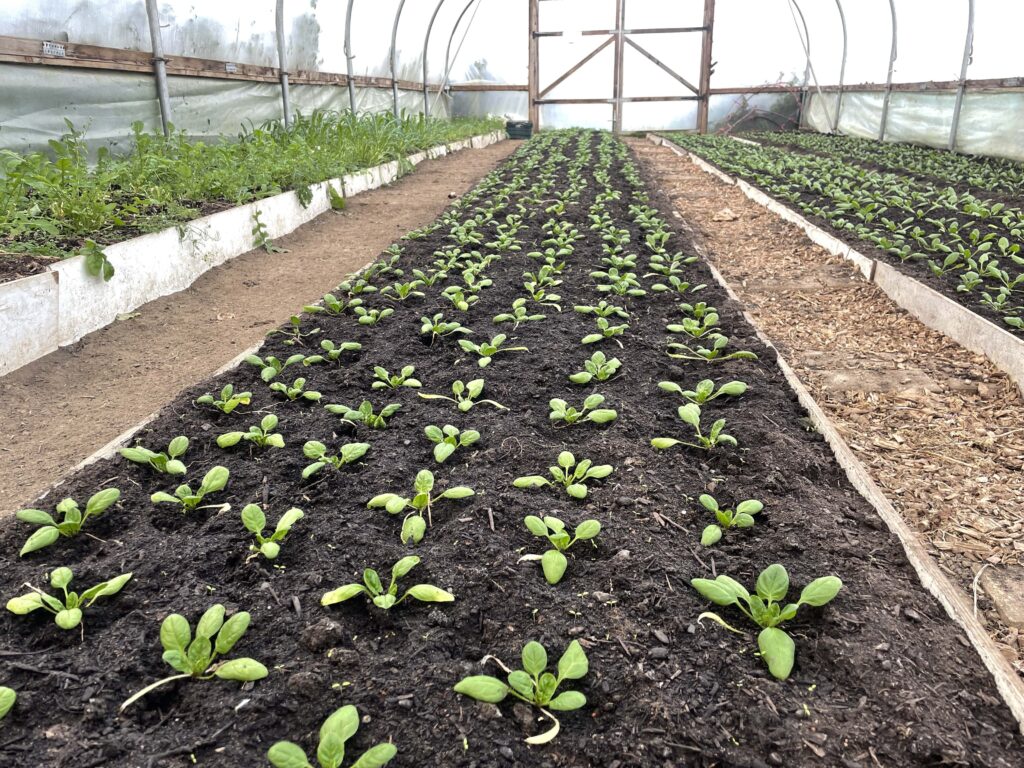
-Last of winter sowing got completed by end of October – these all grew into the wintery greens you see filling the tunnels now which will feed us all the way until late spring.
-The propagator shed is taking a break from seed sowing while we finally focus on crop planning and seed audits and orders getting us ready for next year
-The only sowings we will do is broad beans and onion seeds although we will limit the number of broad beans this year as they take too long to harvest
-Seed sowing will properly kick off again from February, sowing all the seeds of the hot Summer crops we love.. in February.
-Example of overwintering crops in the ground now that we won’t eat until next year include: Our overwintering brassicas like kale and cabbages and purple sprouting broccoli and of course garlic and onion sets.
-Our earliest early season crops for harvest from March tends to be sown in November and December to have young plants sitting ready to replace the overwinter harvested plants. These are varieties such as komatsuna, green onions, mizuna, pak choi, and lettuces.
-We have also sown spinach and chard in the past, but we have found they tend to be better left until February. Although we don’t sow very much in January due to the lack of light some slow growing plants can be sown as they won’t get spoiled by going ‘leggy’; onion seeds for example.
-Also sown at this time of year are garlic sets, onion sets and broad beans usually direct into the ground. However, as the ground is so wet which could rot the sets and seeds, we will start these off in trays in the polytunnel before moving to the cold frame where they will get rooted and can then survive to be transplanted in spring.
-In the case of garlic we like to plant both ways so I can be sure to get a harvest. Garlic can be planted both late autumn or early spring as it loves to be frozen. This helps each clove to split into multiple new cloves before bulking up ready for harvesting.
3. Compost – The Seed Compost Project
This year we have been experimenting with creating our own seed sowing compost. The farm has been moving away from using peat compost for some time with meetings and research being carried out by members on the best alternative. The research is still ongoing and interesting connections are being made.
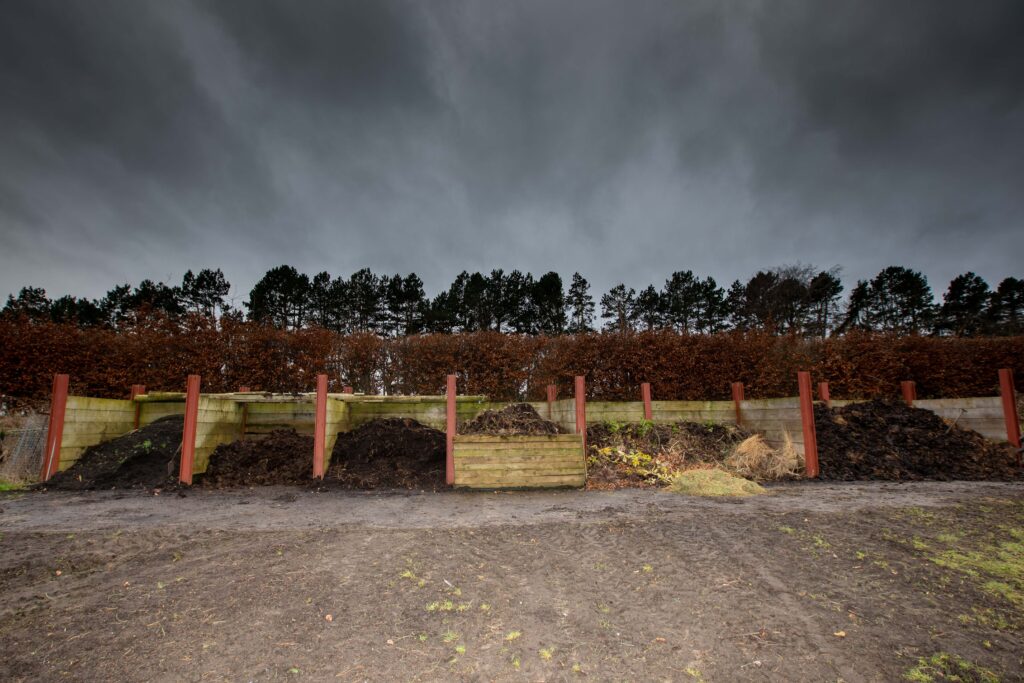
Meanwhile back at the Ovington site, Ian has dedicated an entire bay from our compost system to creating our own seed compost. The compost created in the amazing purpose-built bays plays such a vital role in adding that all needed boost of fertility to the farm in order to grown healthy nutritious crops.
We add it to all the beds on the site ready for strong and healthy plants. However, seeds and seedlings require a slightly different type of compost in order to get a good rate of germination. The compost that usually gets created in the bays is much coarser, but seeds and seedlings need something much finer as well as not require much nutrition at all at this stage.
In this special dedicated bay just for seed compost, you will find that Ian has placed only fine garden and veg waste like leaves rather than woody stems as well as flower meadow hay donated by Ian from a surplus of hay baling.
We should see the results of this homemade compost in the spring. This is an exciting project alongside the research happening by the members and should hopefully help us completely move away from peat compost once and for all.
4. Propagator – Squashes and Pumpkins
We use our purpose built propagator to provide a warm and dark room to allow us to germinate our seeds before planting. We have a heated gas burner that would normally regulate the temperature of the propagator to around 16 to 20 degrees to propagate the seeds.
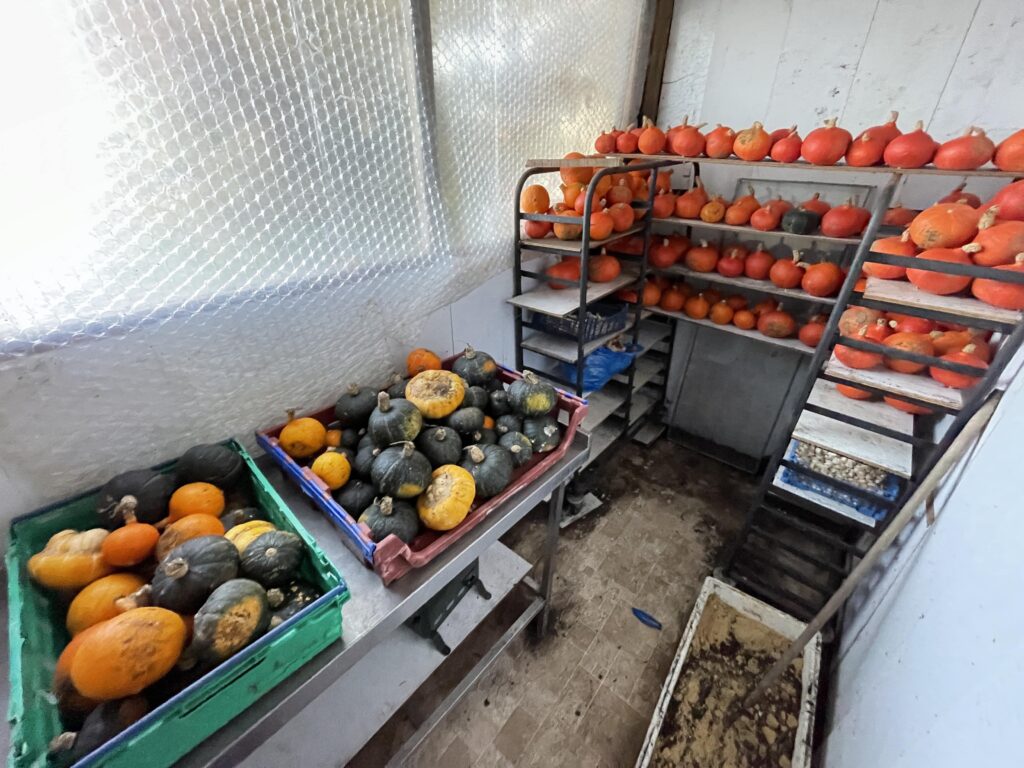
In the summer we used the propagator as a place to grow seeds as it provided a cooler place with the polytunnels being so hot for seed growth. This Autumn they have taken on the role of storing an abundance of squashes needing a dark room to prolong their ripeness.
We have seen a very good harvest of both squashes and pumpkins alike this Autumn with both being planted a little later and so we did not need to water them. We think they did well despite not being watered so much. We were worried about them because they were planted late and seemed a bit stressed but actually, we think the heatwave summer we’ve had helped them thrive.
We have seen a very good harvest of both squashes and pumpkins alike this Autumn. We were initially worried about them as they were planted late but we think the heatwave’s sunshine helped them thrive.
Squashes
Everything that grows throughout the season from courgettes in summer to those big orange magician pumpkins in autumn can be called squash, with courgette types being called summer squash (as they are harvested in summer!). These have very soft skins and wouldn’t store for example.
Our winter squashes; uchiki kuris, turks turbans, magicians and butternuts which can be stored and come in all shapes and sizes and develop thicker skins the longer they are stored. The fact that they can be stored is what makes them great because you can enjoy them for longer out of the growing season which is where the propagator shed comes in.
Before storing them in the shed they need to be cured which happens out in the fields as the stems die back and also by being brought into the tunnels for a few days. At that point they are ready for storage.
5. Basket of Fire
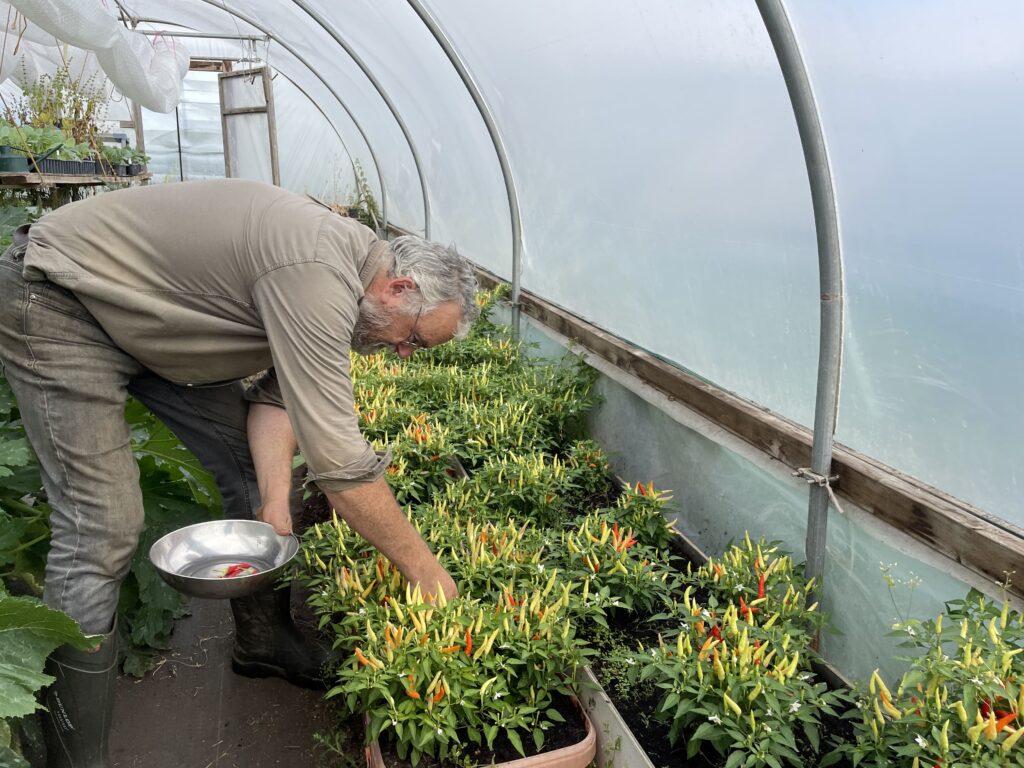
Our new variety of chillies have been a real success story this Summer / Autumn period. With good crops they have also been popular with our members and easier to harvest as the chillies face upwards so no need to forage through the leaves of the plants.
As the chilli plants were lifted to make room for the next crops they were potted and distributed among the members
This is certainly a chilli variety that we will be looking to plant again next year.
6. The Brassicas and Cauliflower
The brassicas this year have fared extremely well throughout. This may be down to the warmer Autumn and less rain up until mid-November.
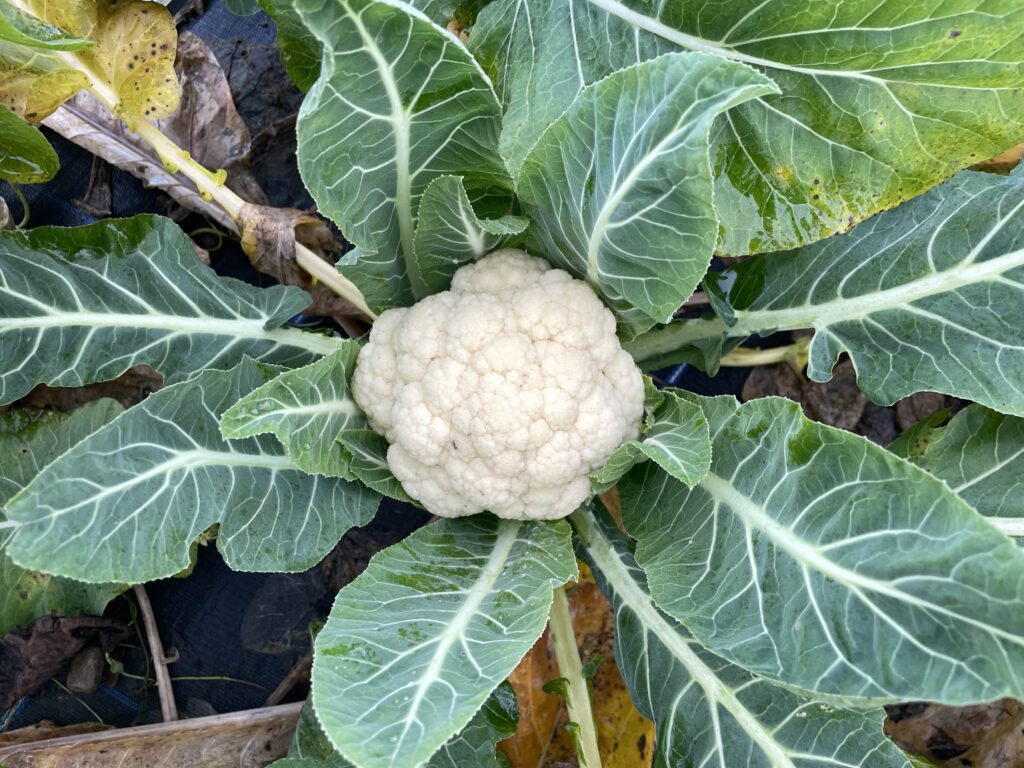
The cauliflowers crops we have been harvesting are the largest in size for quite a number of years. Giant cauliflower even. You will see that the colour of our cauliflowers are a rich creamy yellow colour rather then the bleached white varieties found in the supermarkets.
7. Spinach, Chard and Spicy Winter Salad Mixes
As the growing season draws to a close and temperatures drop, we rely on our polytunnels to keep providing us with freshness and vitality. The extra degrees and shelter mean we can keep growing a range of winter crops through the colder months.
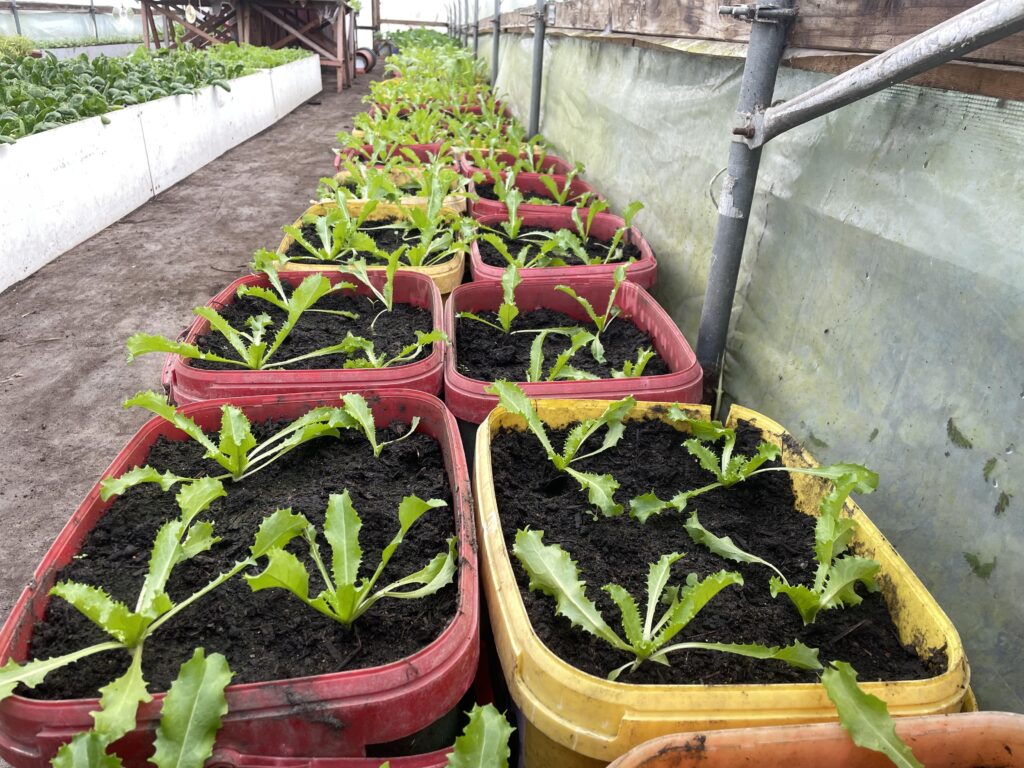
October and November see us transforming the tunnels from tall summer favourites such as tomatoes and cucumbers to a low lying sea of green in the form of leafy crops such as spinach, chard and a mix of spicy winter salad leaves.
It’s lovely to have these leaves alongside our squashes and cabbages as well as leafy greens being packed with vitamins, minerals, and fibre. Leafy greens are mostly associated with vitamins A, C and K.
Our spicy salad mix includes rocket, mixed mustard, mibuna, mizuna – all peppery and delicious. We try and balance these with milder leaves like winter lettuces and baby leaf spinach.
Any of these greens can be eaten raw or lightly stir fried and added to a meal for a real immunity boost which can be much needed in these colder months.
8. Sprouts – Our Winter Harvest Showcase
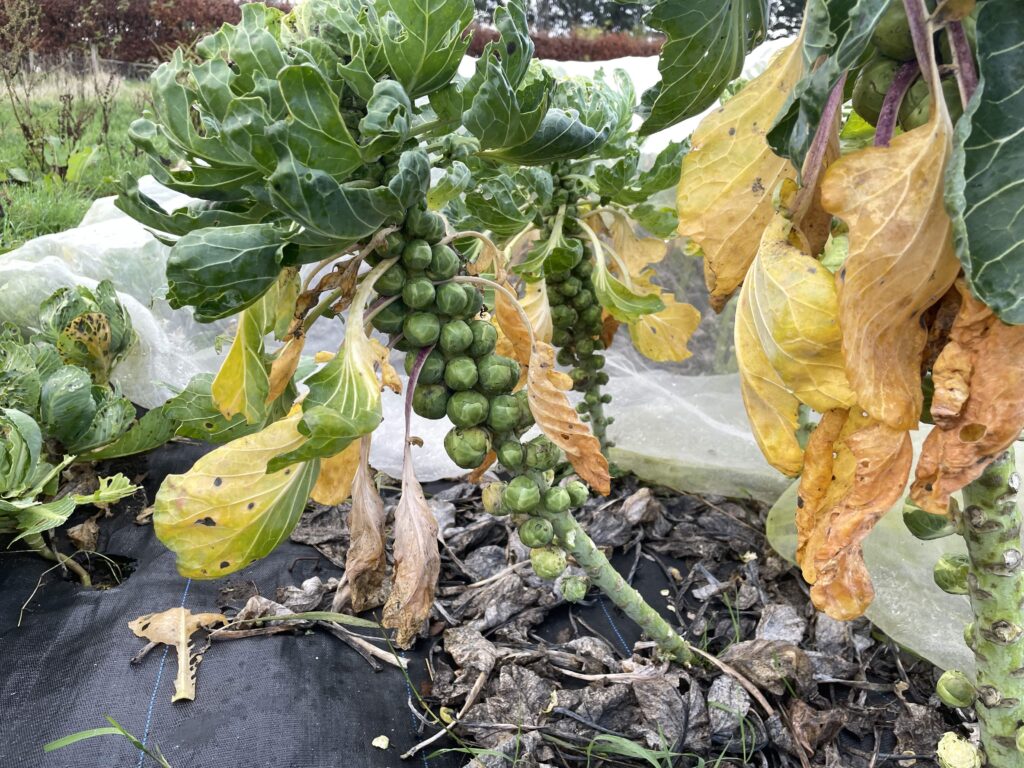
We have already been harvesting our sprouts very successfully this year with our crops continuing well into their most popular Christmas period.
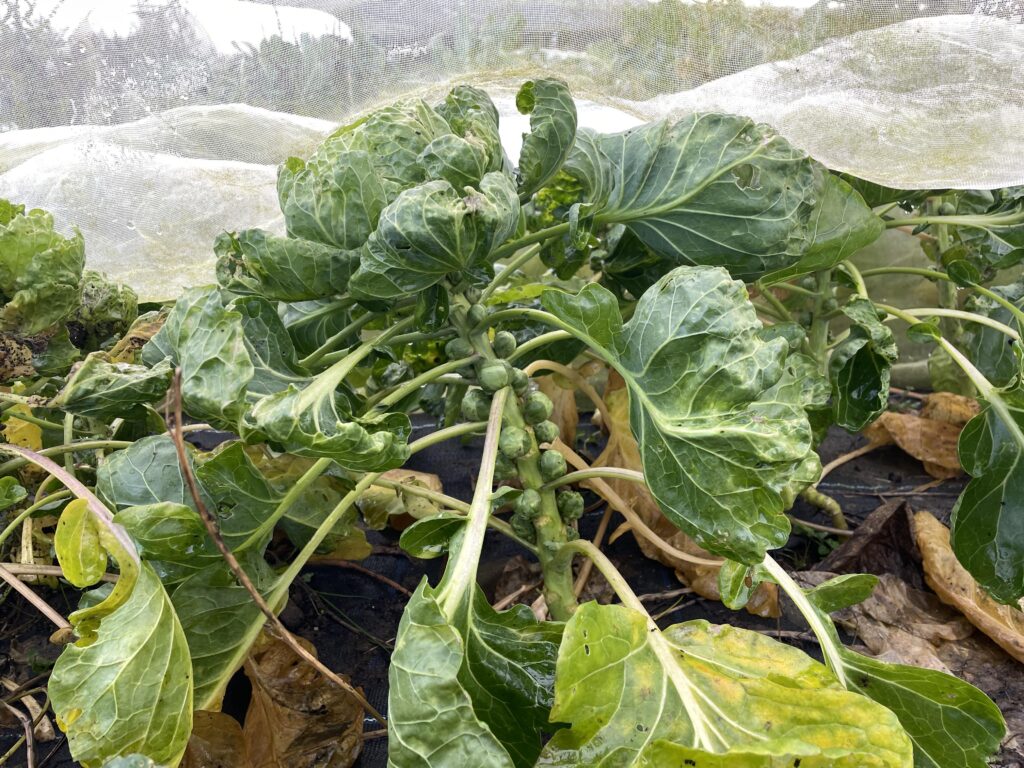
It is thought that a frost improves the flavour of sprouts as the drop in temperature is what encourages some plants to produce its sugars as a kind of defence for the plant.
Growing tips include removing lower leaves or yellowing leaves to encourage growth to the sprouts but keeping the top leaves for photosynthesis and the health of the plant.
Sprouts tend to mature from the bottom up and you can harvest when you see a few mature ones on the stalk picking the biggest ones and then leaving the rest to grow on. Sprouts twist or snap off quite easily but you can also harvest with a knife.
9. Protecting The Plants
To protect the brassicas from pests such as birds and caterpillars, the use of netting can be very useful. Birds are a particular problem at the start and end of the season when their other food sources are scarce and can really decimate a crop.
We try to keep brassicas covered all the time but particularly at these times of year. Interestingly, some growers really dislike nets and feel that if you have a strong plant and protect it for the first while, you can leave it be.
Caterpillars can also be quite damaging with those pretty white butterflies fluttering about being the main culprits. These are Cabbage White Butterflies and the nets prevent them from laying its eggs on young plants. Some inevitably still manage to get through and checking for caterpillars at seedling stage in the propagator is also very important!
Covering with a net can be as simple as throwing the net over and securing with pegs or heavy objects. Building a frame to lift the net off the crop would be more ideal for air flow and not letting a frosty soggy net cling to any plants.
10. Flowers
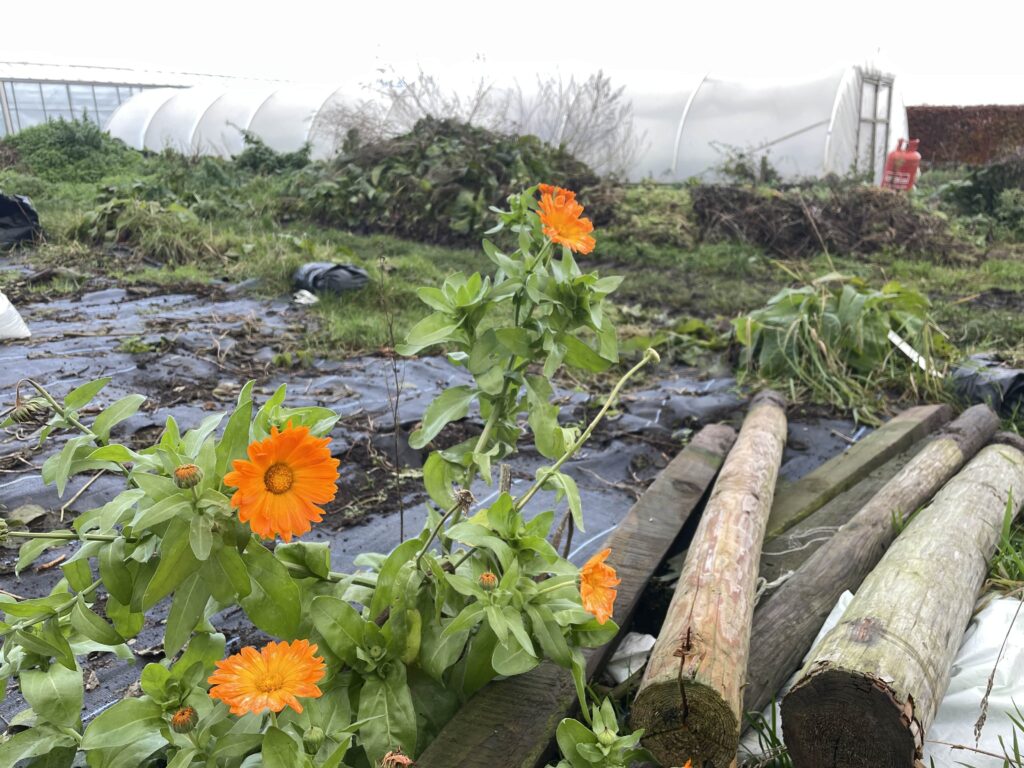
We have been enjoying the most wonderful bloom of these calendula autumn flowers.
That flower is Calendula Officinalis or also known as Marigold or just Calendula. It is one of our favourite plants. It self seeds so successfully that it seems like a perennial by returning all the time, but it is an annual. It is a wonderful attractor of predators for pests so a good protector for our crops and great to have on the edges of beds and polytunnels.
The flowers are edible also and can be added to salads or infused in a tea.
Calendula as a herbal medicine is also well known for its skin healing properties for minor cuts or burns if processed into an oil or cream.
The root of its latin name means Calendar as it’s sometimes known to flower all year despite having an official flowering period so keep an eye out for these gorgeous beauties.