
Onion skin very thin, a milder winter coming in; Onion skin very tough, the coming winter’s very rough
Onions are a part of the allium family. An allium is described as any plant with an onion odour that flowers in a round cluster. This group contains onion, leeks, garlic, and chives. Wild garlic is also an allium
Allium flowers in a bouquet represents good fortune, as in bon voyage, humility and patience. Alliums were often given to loved ones going abroad signifying their giver would wait for their return. Onions were grown in Egypt in the time of the pharaohs so obviously like warm sandy conditions.
Judging by the amount of onion flowers I’ve seen over the years I must have plenty of patience!
For a CSA such as GO Local Food, onions are an essential crop. They are very versatile and one of the most popular vegetables for cooking. We aim to grow a variety of alliums so that there is an allium in every cropshare. Sounds simple enough? However if we have 100 shares that’s up to10,000 onions a year.
Growing onions is generally very easy, getting good onions is a bit more tricky!
Here’s how we do it…
Onions like a rich free draining soil that’s not too compacted, that hasn’t been freshly manured. They are perfectly comfortable overwintering in the UK climate and grow well throughout winter and spring. They dislike sitting in cold water, especially before their roots have got a hold. They do however like plenty of water when they are bulking up. Onions also like being open to the breeze which can boost their growth, My understanding is the movement encourages a better root system which gives greater uptake of nutrients.
Onions have a couple of ways for propagation, either from seed or with young onions known as sets.
Onion sets are grown from seeds and stopped at an immature stage before being dried ready for planting at a later stage. Sets are said to be more prone to bolting which means they produce a flower before producing an edible bulb. Bulbing onion seeds are rarely direct sown, more often started under heat and transplanted into their final positions later. Obviously, this is more time consuming but is cheaper and bolting is less likely. Overwintering onions are generally ready for harvest a month so earlier then spring planted onions. Generally overwinter onions are not so good for long term storage
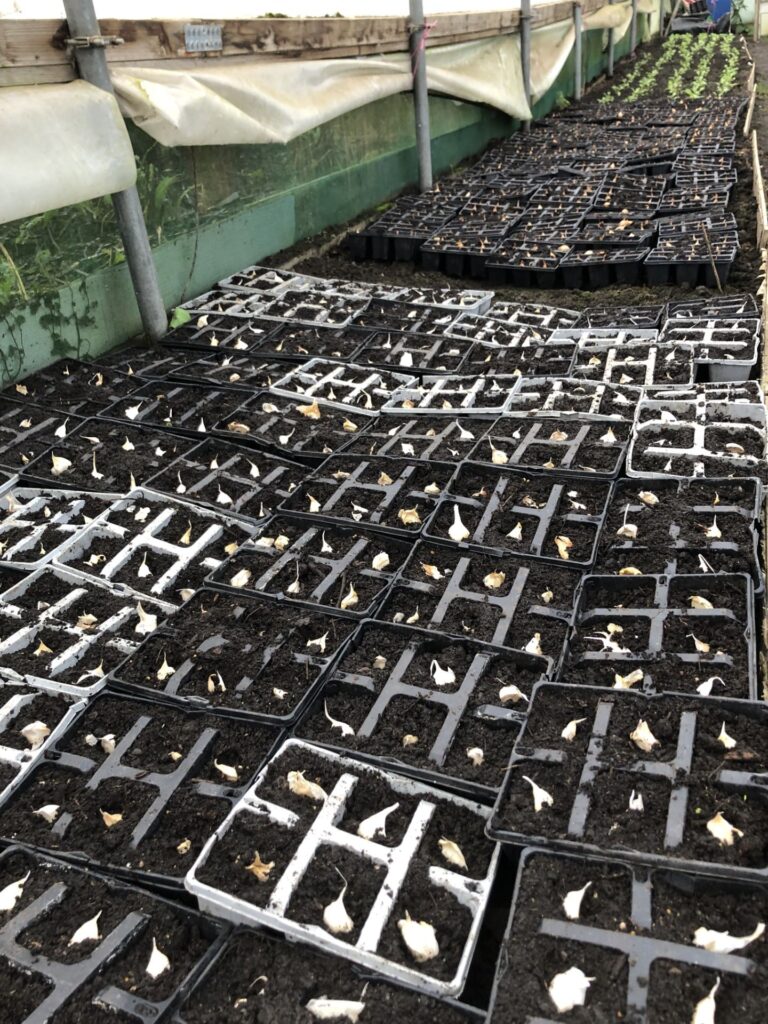
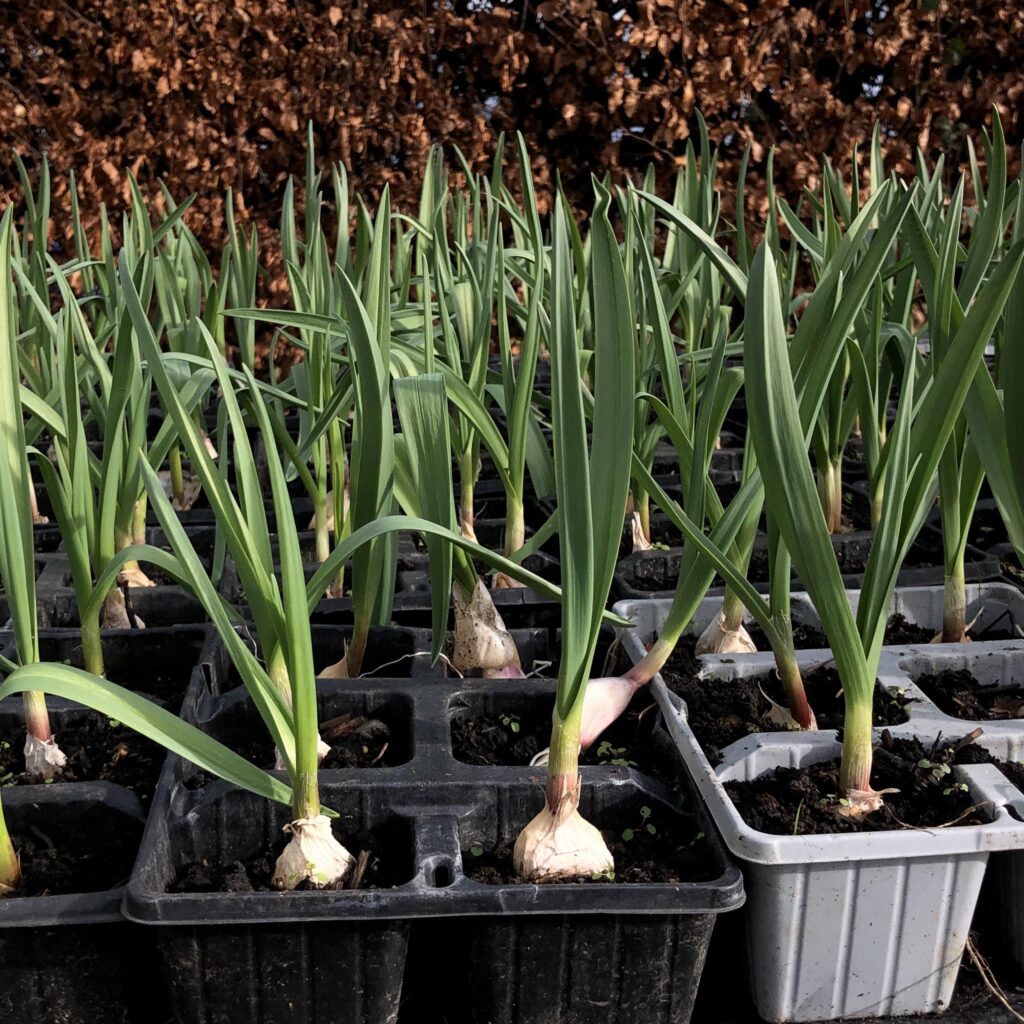
Our onion season starts in October when we start planting overwintering or Japanese type onion sets. Sturon and Shenshyu are our go to favourites. 2-3000 planted through a mulch sheet. In the past we have covered the onion sets for two weeks after planting to prevent birds from pulling out the sets but realised this allowed mice to be safe as they chewed the onions so now we don’t bother. We also put around 500 sets in cellular trays for replacements and very early planting if weather allows. In November we fill about 100 large tubs (35litre pots) each with 25 onion sets 2-3cm apart. These are our ‘scallion’ or green onion which will be ready to be harvested from mid-April. A particular favourite of mine.
Next it’s the start of our seed sown crops. In January we sow 2500 seeds each of our summer onions, Hybound is one of our favourites I will also sow some red onion seeds (red Baron) at the same time. These will be pricked out into cellular trays when they’ve reached the shepherds crook stage- they look like a question mark? And transplanted into the fields in March, which is where we finally plant out the summer onion sets 75% direct into soil and 25% in 9 cell trays as a ‘Just in case’ these are usually planted late April
We have found this to be the best approach to increase the production of good sized bulbed onions and reduce the risk of crop failure.
The onions are grown through mulch and only watered when a long period of dry weather occurs. I very rarely weed my onion beds relying on the mulch sheets to keep the weeds down and the soil moist. The first onions ready are the pot grown ones that are in the polytunnel, these are harvested as ‘scallion’ or green onions. The bulbs are just starting to form and have fresh green leaves these are delicious chopped into a hot potato salad. The first of the overwinter onions will be harvested and used immediately, while the summer onions are harvested when the leaves have collapsed and started to brown. These are loosened in the soil first and allowed to die back for two weeks before lifting completely on a dry day and storing on racks in the polytunnel. Before hanging in bags of 25 and stored in a cool dark shed. On our best year we’ve recorded almost a tonne of onions harvested.
Onions have few problems and pests but the ones they do get are pretty serious! Crop rotation is especially important when mass growing onions as it reduces the risk of and slows down the prevalence of white rot. If this gets into your plot it can take years to eliminate. For this reason, I do not put ANY allium related crop or offcut on the compost heap. Recently allium leaf miner has been a growing pest in leeks and onions and so growers are beginning to cover their crops to protect against which means they done get the wind boost I mentioned earlier. Who would be a grower!
Our onion skins are slightly thicker this year!


