Summary of year 1


We are a year into our trial and there has been a lot of change on the no-dig beds and the compost bays. Year 1 of the project has seen about 40 m3 of compost produced and put into use, the trial beds established and working within the site wide crop rotation plan, workshops offered providing training on this alternative growing method, over 330kg of food grown and seen an increase in the mole population.
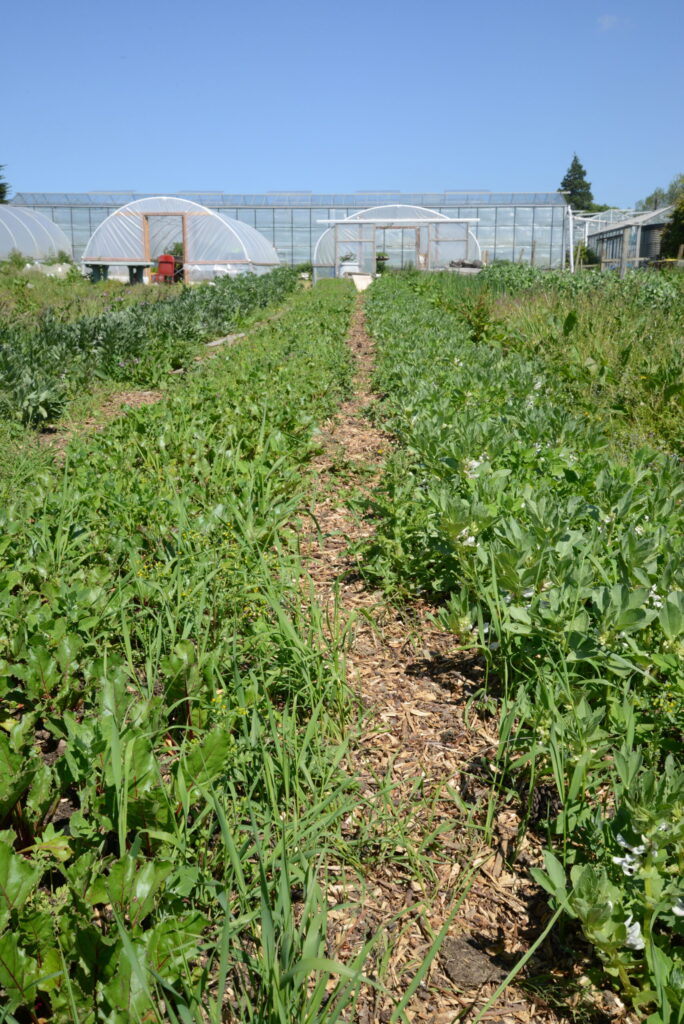
We have been applying the no-dig method on 5 beds covering about a quarter of our growing area, with several plots per bed. The dimensions of plots and paths allow workers to either straddle across the plot or stand and work from the side.
We have found the continued presence of weeds a significant challenge. The existing weed burden brought to the surface when transplanting and harvesting is a contributing factor, also that some weeds seed are surviving the compost making process, with the core reaching temperature, but possibly not the edges. Therefore manual weeding is still needed, however observations of weeds indicate that there appear to be less perennial weeds in some beds and workshares have found that the weeds can be much easier to deal with as the soil is not so compressed.
We have had to alter some of our planting patterns to allow for the narrower plots compared to other areas on the site.
Labour is heavy and much more than expected compared to the mechanised methods on the other beds. We hope to see an improvement with the weed burden and labour required as the project continues through its trial.
We have found a positive compared to the traditional beds of the no-dig beds being worked on longer in the bad weather. This has allowed us to grow a greater number of crops each year compared to the traditional beds.
Our compost raw material comes from our site and the local nursery. Alongside the production of about 40 m3 of compost we have also captured about 850 litres of effluent – a mix of comfrey and compost ‘tea’, which can also be utilised across the site.
Operation of the bays has evolved over the year, with tweaks being made to ensure efficient use and to work with the elements. We plan to continue monitoring our compost production; including several batch tests throughout the year to check its quality.
We like talking compost – especially some of us! And over the year have welcomed members and non-members to 3 workshops. We are hoping to welcome more keen compost makers and alternative agriculture fans to our next free workshop on Saturday 19th September at 10.30am. If you would like to join us email admin@golocalfood.org.uk